CRA Direct Deposit vs Cheques: Which Payment Method Is Better?
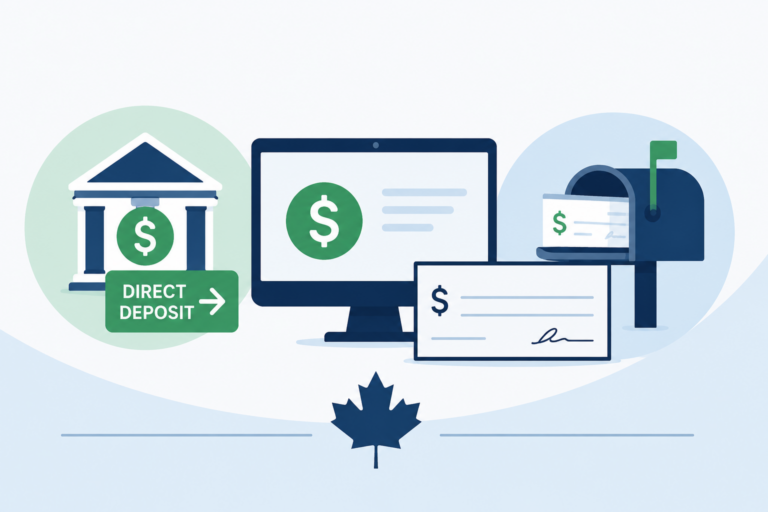
The Canada Revenue Agency (CRA) offers two ways to receive tax refunds and benefit payments: direct deposit or paper cheques. While both methods are available to eligible individuals, direct deposit has become the preferred option because it is generally faster, more secure and more convenient.
This guide compares CRA direct deposit and cheque payments, explains the advantages and disadvantages of each option and helps you decide which payment method is best for your situation.
What Payment Methods Does the CRA Offer?
The Canada Revenue Agency issues eligible refunds and benefit payments either by direct deposit into your bank account or by mailing a paper cheque. Your chosen payment method can affect how quickly you receive your money.
| Payment Method | Available? |
|---|---|
| Direct deposit | Yes |
| Paper cheque | Yes |
| Electronic transfer to Canadian bank account | Yes |
| Cash payments | No |
Direct Deposit vs Cheques: Side-by-Side Comparison
| Feature | Direct Deposit | Paper Cheque |
|---|---|---|
| Payment speed | Usually faster | Mail delivery required |
| Security | Very secure | May be lost or delayed |
| Convenience | Automatic deposit | Must deposit cheque |
| Risk of delivery delays | Low | Higher |
| Bank visit required | No | Usually yes |
Why Does the CRA Recommend Direct Deposit?
Direct deposit allows eligible payments to be deposited automatically into your bank account, reducing the risk of lost mail and helping ensure you receive your money as quickly as possible. It also eliminates the need to deposit paper cheques manually.
| Benefit | Direct Deposit |
|---|---|
| Faster access to funds | Yes |
| Automatic payments | Yes |
| Reduced risk of lost payments | Yes |
| No cheque deposit required | Yes |
When Might a Paper Cheque Be a Better Option?
Although direct deposit is recommended for most people, some individuals may still prefer receiving paper cheques. This may be appropriate if you do not have a Canadian bank account or if you prefer receiving payments by mail.
| Situation | Paper Cheque Suitable? |
|---|---|
| No Canadian bank account | Yes |
| Prefer mailed payments | Yes |
| Want the fastest payment | No |
| Receive frequent CRA benefits | Usually no |
Which CRA Payments Can Be Sent by Direct Deposit?
Most payments issued by the Canada Revenue Agency can be deposited directly into your Canadian bank account once you register for direct deposit.
| CRA Payment | Direct Deposit Available? |
|---|---|
| Income tax refund | Yes |
| Canada Child Benefit (CCB) | Yes |
| GST/HST Credit | Yes |
| Canada Carbon Rebate (where applicable) | Yes |
| Canada Workers Benefit (CWB) | Yes |
| Other CRA-administered credits | Usually yes |
How Do You Switch from Cheques to Direct Deposit?
Changing your payment method is straightforward. You can register or update your direct deposit information through CRA My Account, your participating financial institution or by using other official CRA registration methods.
| Method | Available? |
|---|---|
| CRA My Account | Yes |
| Participating financial institution | Yes |
| Canada Revenue Agency | Yes |
| Paper registration (where applicable) | May be available |
Can You Switch Back to Paper Cheques?
Yes. If you no longer wish to receive direct deposits, you can update your payment preferences with the Canada Revenue Agency. Keep in mind that switching back to paper cheques may increase the time it takes to receive your payments because they must be delivered by mail.
| Change | Possible? |
|---|---|
| Cheques to direct deposit | Yes |
| Direct deposit to cheques | Yes |
| Update banking information | Yes |
| Update payment preferences | Yes |
Which Payment Method Should You Choose?
For most Canadians, direct deposit is the preferred payment method because it offers faster access to funds, greater security and less risk of payment delays. Paper cheques remain available, but they are generally best suited for individuals who cannot or prefer not to use direct deposit.
- Choose direct deposit for faster payments.
- Reduce the risk of lost or delayed mail.
- Receive benefit payments automatically.
- Avoid visiting your bank to deposit cheques.
- Keep your banking information updated with the CRA.
How Secure Is CRA Direct Deposit?
Direct deposit is considered the most secure way to receive Canada Revenue Agency payments. Funds are deposited electronically into your Canadian bank account, reducing the risk of lost, stolen or delayed paper cheques.
| Security Feature | Direct Deposit |
|---|---|
| Electronic payment | Yes |
| Risk of lost mail | Very low |
| Bank account verification | Required |
| Automatic payment delivery | Yes |
What Happens If a CRA Cheque Is Lost?
If your paper cheque is lost, stolen or does not arrive, you should contact the Canada Revenue Agency. The CRA can investigate the missing payment and, if appropriate, arrange for a replacement cheque or another payment solution.
| Situation | Action |
|---|---|
| Cheque lost in the mail | Contact the CRA. |
| Cheque stolen | Report it to the CRA. |
| Cheque damaged | Request further instructions. |
| Direct deposit failed | Verify your banking information. |
Can You Receive Different CRA Payments Using Different Methods?
No. Your CRA payment preference generally applies to eligible payments issued by the Canada Revenue Agency. Once direct deposit has been registered, future refunds and eligible benefit payments are normally deposited into your selected bank account.
| CRA Payment | Uses Registered Payment Method? |
|---|---|
| Income tax refunds | Yes |
| Canada Child Benefit (CCB) | Yes |
| GST/HST Credit | Yes |
| Canada Workers Benefit (CWB) | Yes |
Choosing Between Direct Deposit and Cheques
While both payment methods remain available, direct deposit has become the standard choice for most Canadians because it is faster, safer and more reliable than receiving payments through the mail. Paper cheques continue to be an option for individuals who prefer them or who do not have access to direct deposit.
If you receive multiple CRA benefits throughout the year, switching to direct deposit can simplify your finances and reduce the likelihood of payment delays caused by postal service interruptions.
| Best Practice | Benefit |
|---|---|
| Use direct deposit | Receive payments faster. |
| Keep banking information updated | Avoid failed deposits. |
| Monitor CRA My Account regularly | Verify upcoming payments. |
| Report missing cheques promptly | Help resolve payment issues sooner. |
Related Northbly Guides
- How to Update Your CRA Direct Deposit Information
- CRA My Account Guide
- What to Do If Your CRA Benefit Payment Is Missing
- Canada Child Benefit Payment Dates
- GST/HST Credit Payment Dates
- Canada Government Payment Dates
Frequently Asked Questions
Is direct deposit faster than receiving a CRA cheque?
Yes. Direct deposit is generally the fastest way to receive CRA refunds and benefit payments because the funds are deposited directly into your bank account on the scheduled payment date. Paper cheques must be delivered by mail, which can add several days.
Which CRA payments can I receive by direct deposit?
Most payments administered by the Canada Revenue Agency can be received by direct deposit, including income tax refunds, the Canada Child Benefit (CCB), GST/HST Credit, Canada Workers Benefit (CWB) and other eligible tax credits and benefits.
Can I still receive paper cheques from the CRA?
Yes. Paper cheques remain available if you have not enrolled in direct deposit or if you prefer receiving payments by mail.
How do I switch from paper cheques to direct deposit?
You can register for direct deposit through CRA My Account, a participating Canadian financial institution or other official CRA registration methods.
Can I switch back to paper cheques later?
Yes. You can update your payment preferences with the Canada Revenue Agency if you decide to stop using direct deposit. Keep in mind that cheque payments may take longer to arrive because they are sent by mail.
What happens if my direct deposit information is incorrect?
If your banking information is outdated or incorrect, your payment may be delayed or rejected. You should update your direct deposit details as soon as possible through CRA My Account or another approved CRA method.
What should I do if my CRA cheque is lost?
If your paper cheque has been lost, stolen or has not arrived within a reasonable time, contact the Canada Revenue Agency so they can investigate and advise you on the next steps.
Can I receive some CRA payments by direct deposit and others by cheque?
Generally, no. Your registered payment method normally applies to eligible payments issued by the Canada Revenue Agency. Once direct deposit is active, future eligible refunds and benefit payments are typically deposited into your bank account.
Is direct deposit more secure than paper cheques?
Yes. Direct deposit reduces the risk of lost, stolen or delayed mail because payments are transferred electronically into your bank account.
Do I need a Canadian bank account for direct deposit?
Yes. To receive CRA payments by direct deposit, you generally need an eligible Canadian bank account that can accept electronic deposits.
Where can I find official information about CRA direct deposit?
The Canada Revenue Agency provides official guidance on direct deposit registration, updating banking information and payment methods through the Government of Canada website.
Official Government Resources
For the latest information about CRA direct deposit and payment methods, consult the official Government of Canada resources below.
Official Government Information
The Canada Revenue Agency administers direct deposit for eligible tax refunds and benefit payments. Payment methods, registration procedures and eligibility requirements may change over time. Always consult the official Government of Canada resources for the latest information before updating your payment preferences.
Disclaimer
Northbly publishes independent informational content to help readers better understand Canadian government payments, tax credits and benefit programs. Although every effort is made to keep this guide accurate and up to date, government policies and procedures may change.
This article is provided for general informational purposes only and should not be considered legal, financial or tax advice. For questions about your CRA payment method or your personal circumstances, contact the Canada Revenue Agency or a qualified professional.