Canada Tax Credits Guide 2026
Tax credits can help Canadians reduce the amount of income tax they owe and, in some cases, receive refundable payments or benefit support through the Canada Revenue Agency (CRA).
This guide explains the main federal tax credits available in Canada, including credits for workers, students, caregivers, people with disabilities, medical expenses, housing improvements and more.
Which Canadian Tax Credits Could Put More Money Back in Your Pocket?
Some tax credits are searched for more often because they can provide direct financial support or reduce taxes for a large number of Canadians. These are good starting points if you are trying to understand which tax credits may apply to your situation.
GST/HST Credit Guide 2026
A tax-free quarterly payment for eligible individuals and families with low or modest incomes.
For WorkersCanada Workers Benefit Guide 2026
A refundable tax credit designed to support eligible low-income workers and families.
Disability SupportDisability Tax Credit Guide 2026
A non-refundable tax credit that may help people with severe and prolonged impairments reduce income tax.
Medical CostsMedical Expense Tax Credit Guide 2026
A tax credit that may help Canadians claim eligible medical expenses paid during the tax year.
Browse Tax Credits by Category
Canada has different types of tax credits depending on your income, health, work situation, family responsibilities, education costs and housing needs. Use the categories below to explore the credits most relevant to you.
Disability Tax Credits
Credits and tax support for people with disabilities and their supporting family members.
Medical Tax Credits
Tax credits related to eligible medical expenses, healthcare costs and required treatments.
Family Tax Credits
Credits for caregivers, dependants and families supporting loved ones with specific needs.
Housing Tax Credits
Credits related to accessibility renovations, home changes and multigenerational living arrangements.
Education Tax Credits
Tax credits for tuition and eligible education-related amounts in Canada.
Employment Tax Credits
Credits for workers, training, employment income and eligible volunteer service.
Many Canadians Are Missing These Valuable Tax Credits
The value of a tax credit depends on your income, family situation, province or territory, disability status, expenses and the type of credit involved. Some credits reduce the tax you owe, while others may be refundable and provide a payment even if you owe little or no tax.
For many Canadians, the GST/HST Credit and the Canada Workers Benefit are especially important because they are designed for low and modest-income households. These credits are usually connected to your annual income tax return, so filing your taxes is essential even if your income is low.
Living With a Disability? These Tax Credits Could Help
Canadians living with a severe and prolonged impairment may be eligible for disability-related tax support. The Disability Tax Credit is one of the most important credits in this area because it may reduce income tax and may also help unlock access to other programs.
Eligibility usually depends on how the impairment affects daily life and whether the CRA approves the disability tax credit certificate.
Disability Tax Credit (DTC)
The DTC is a non-refundable tax credit for eligible people with disabilities or their supporting family members.
Read the DTC GuideMany Canadians Miss These Medical Expense Tax Savings
Medical costs can become expensive quickly. The Medical Expense Tax Credit may allow eligible Canadians to claim certain out-of-pocket medical expenses, including some prescription drugs, dental care, medical devices, travel for treatment and other qualifying costs.
Keeping receipts is important because the CRA may ask for supporting documents after you file your tax return.
Medical Expense Tax Credit
This credit may help reduce tax payable when you or your family have eligible medical expenses.
Read the Medical Expense GuideTax Credits for Families, Caregivers and Homeowners
Some tax credits are designed for Canadians who support dependants, care for family members or make home changes for accessibility or multigenerational living.
These credits can be especially relevant for families caring for relatives with physical or mental impairments, seniors, people with disabilities or family members who need additional support.
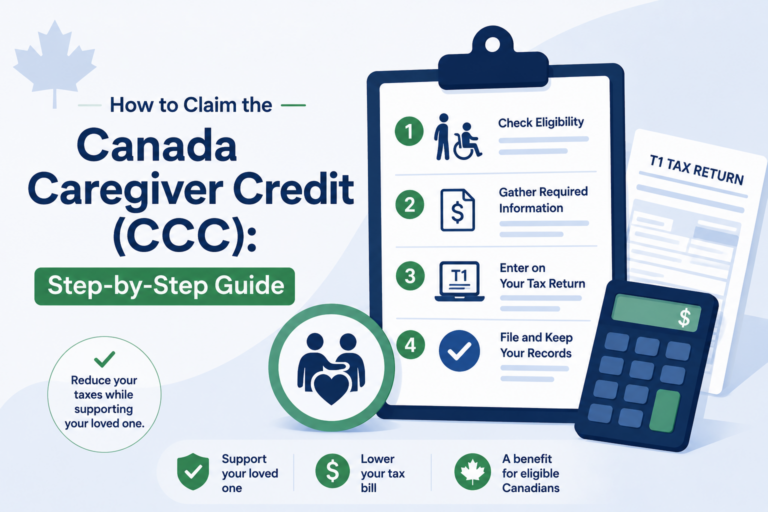
Canada Caregiver Credit
For eligible Canadians supporting a spouse, common-law partner or dependant with a physical or mental impairment.
Home AccessibilityHome Accessibility Tax Credit
For eligible expenses related to making a home safer or more accessible for a qualifying individual.
Home RenovationMultigenerational Home Renovation Tax Credit
For eligible renovation expenses to create a secondary unit for a qualifying relative.
Workers and Students Could Be Leaving Tax Savings Unclaimed
Workers, people with employment income and Canadians improving their skills may qualify for tax credits connected to work, training or community service.
These credits can help support low-income workers, encourage training and recognize eligible volunteer firefighters who provide important services to their communities.
Canada Workers Benefit
Financial support for eligible low-income workers and families.
Skills & TrainingCanada Training Credit
A credit related to eligible tuition and training fees for qualifying individuals.
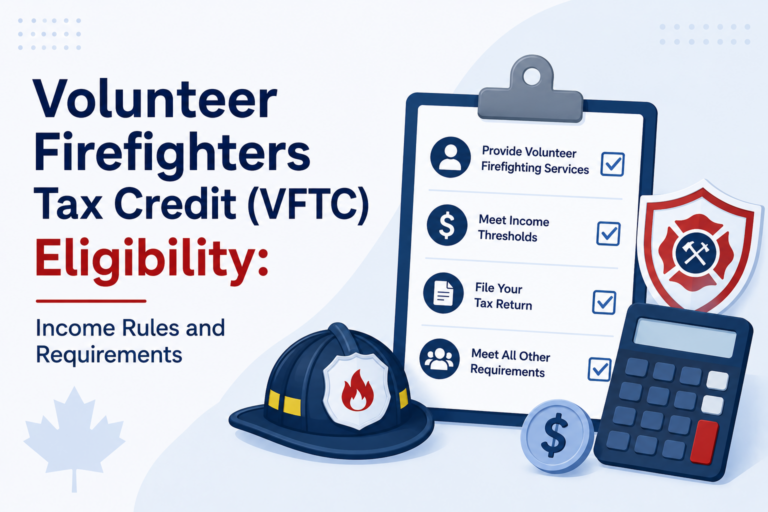
Volunteer ServiceVolunteer Firefighters Tax Credit
A federal credit for eligible volunteer firefighters who meet the required service hours.
Students Can Also Claim Valuable Tax Credits
Students enrolled in eligible post-secondary programs may be able to claim education-related tax credits. The Tuition Tax Credit is one of the most important credits for students and recent graduates in Canada.
In some cases, unused tuition amounts may be carried forward to a future year or transferred to an eligible family member, depending on CRA rules.
Tuition Tax Credit
A federal tax credit for eligible tuition fees paid to qualifying educational institutions.
Read the Tuition Tax Credit GuideHow to Claim Tax Credits in Canada
Most federal tax credits are claimed when you file your annual income tax and benefit return with the CRA. Some credits are calculated automatically based on your return, while others require specific forms, schedules or supporting documents.
Check whether you meet the eligibility rules for each credit.
Keep receipts, certificates, tax slips and supporting documents.
Complete the required lines, schedules or forms on your tax return.
File your income tax and benefit return before the deadline.
Review your Notice of Assessment and respond to CRA requests if needed.
Where to Find Official Tax Credit Information
The Canada Revenue Agency is the official source for federal tax credits, eligibility rules, forms, payment information and benefit calculations.
Northbly provides simplified guides to help readers understand the basics, but official CRA pages should always be checked before applying, filing or claiming a tax credit.
Frequently Asked Questions
What is a tax credit in Canada?
A tax credit is an amount that can reduce the income tax you owe. Some tax credits are refundable, while others are non-refundable.
What is the difference between a refundable and non-refundable tax credit?
A refundable tax credit can result in a payment even if you owe little or no tax. A non-refundable tax credit can reduce your tax payable, but usually does not create a refund by itself.
Do I need to file a tax return to receive tax credits?
In most cases, yes. Filing your income tax and benefit return allows the CRA to determine eligibility for many credits and benefits.
Can I claim more than one tax credit?
Yes. Many Canadians qualify for multiple tax credits depending on their income, family situation, expenses, disability status, education and work circumstances.
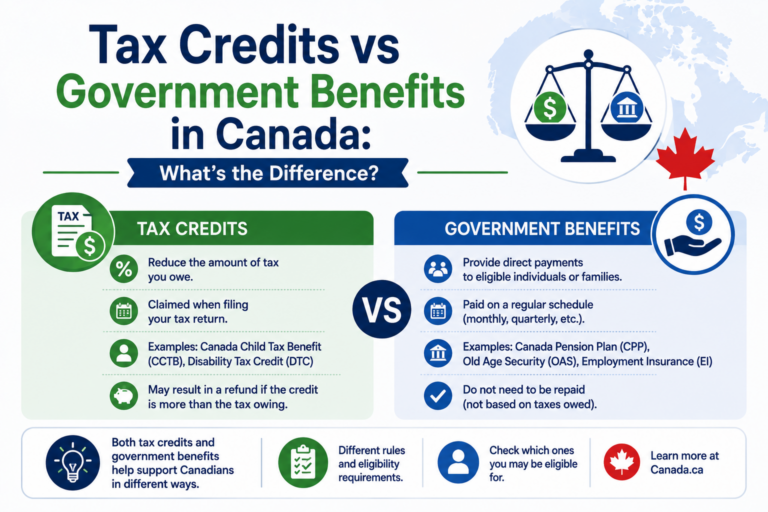
Are tax credits the same as government benefits?
No. Some tax credits are connected to benefit payments, but a tax credit generally reduces tax payable or is calculated through your tax return. Government benefits may be paid separately depending on the program.
Where can I check if I qualify?
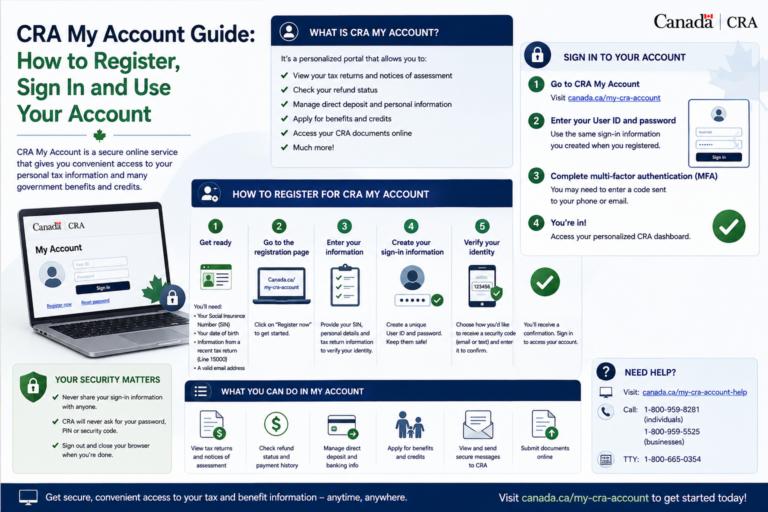
You can check eligibility through the CRA website, your CRA My Account, official tax forms or by speaking with a qualified tax professional.