Complete Guide to Canada Government Benefits: Programs, Eligibility and How to Apply
Canada has a wide range of government benefits and support programs designed to help individuals and families with different financial, social and personal needs.
These programs include retirement benefits, family support, tax credits, disability assistance, employment programs and provincial benefits. Eligibility depends on factors such as income, age, residency, family situation and program requirements.
What Are Government Benefits in Canada?
Government benefits are programs created by federal, provincial and territorial governments to provide financial support or services to eligible Canadians and residents.
Some benefits provide direct payments, while others offer tax credits, rebates, savings support or access to important services.
| Benefit Type | Examples |
|---|---|
| Retirement Benefits | CPP, OAS and GIS. |
| Family Benefits | Canada Child Benefit and provincial child programs. |
| Tax Credits | GST/HST Credit and income-based credits. |
| Disability Benefits | DTC, CDB and disability support programs. |
| Employment Benefits | EI and worker support programs. |
Federal vs Provincial Benefits in Canada
Canadian benefits are managed at different levels of government. Understanding the difference between federal and provincial programs can help you find the right support.
| Government Level | Examples |
|---|---|
| Federal Government | CPP, OAS, EI, CCB and federal tax credits. |
| Provincial Governments | Family benefits, rebates and local assistance programs. |
| Municipal Governments | Local services and community support. |
Main Categories of Government Benefits in Canada
Government programs are organized around different life situations. The benefits available to you depend on your personal circumstances.
| Category | Who It May Help |
|---|---|
| Families and Children | Parents and caregivers raising children. |
| Seniors and Retirement | Older adults planning or living in retirement. |
| Disability Support | Eligible individuals and families affected by disability. |
| Workers | Employees and eligible workers. |
| Low-Income Households | Individuals and families needing financial support. |
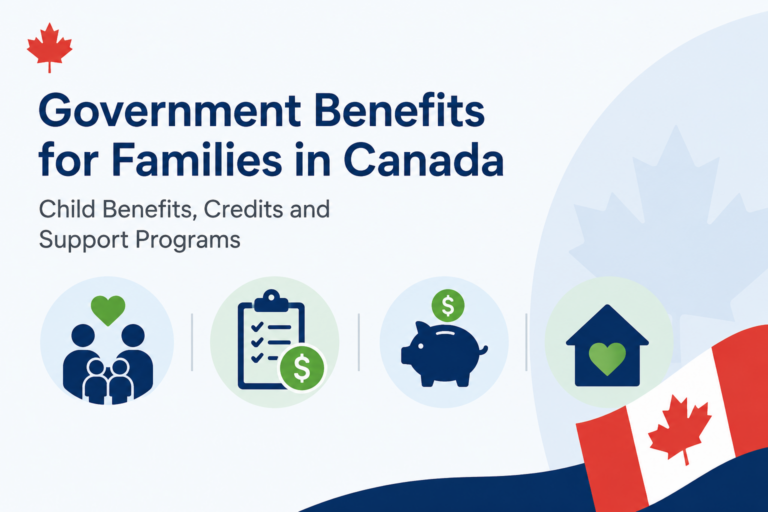
Family Benefits in Canada
Families with children may qualify for different programs designed to help with the costs of raising children and managing household expenses.
| Program | Purpose |
|---|---|
| Canada Child Benefit (CCB) | Monthly support for eligible families with children. |
| GST/HST Credit | Support for eligible households with modest incomes. |
| Provincial Child Benefits | Additional support depending on location. |
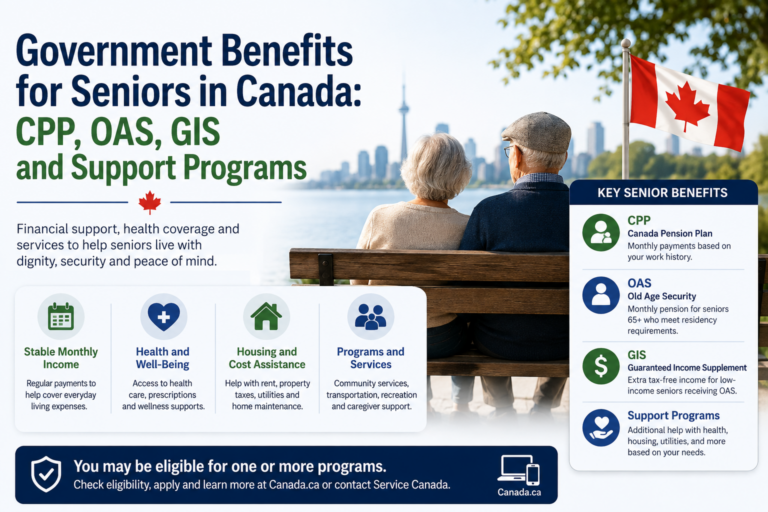
Retirement Benefits in Canada
Canada provides several programs designed to support seniors and retirees. Some are based on contributions, while others depend on age, residency or income.
| Program | Description |
|---|---|
| Canada Pension Plan (CPP) | Retirement income based on contributions. |
| Old Age Security (OAS) | Federal senior benefit based on eligibility requirements. |
| Guaranteed Income Supplement (GIS) | Additional support for eligible low-income seniors. |
Tax Credits and Financial Support Programs
Tax credits are an important part of Canada’s benefit system because many programs use information from annual tax returns to determine eligibility and payment amounts.
Unlike direct financial assistance programs, tax credits often reduce taxes owed or provide payments based on income and personal circumstances.
| Tax Credit | Purpose |
|---|---|
| GST/HST Credit | Helps eligible individuals and families with sales tax costs. |
| Canada Workers Benefit (CWB) | Supports eligible low-income workers. |
| Disability Tax Credit (DTC) | Provides tax support for eligible individuals with disabilities. |
| Medical Expense Tax Credit | Provides tax relief for eligible medical expenses. |
Benefits for Workers in Canada
Workers in Canada may have access to different programs designed to provide temporary assistance, employment support or financial help depending on their situation.
| Program | Purpose |
|---|---|
| Employment Insurance (EI) | Temporary financial support for eligible workers. |
| Canada Workers Benefit (CWB) | Support for eligible working individuals and families. |
| Training Programs | Help workers develop skills and improve employment opportunities. |
Disability Benefits and Support Programs
Canada provides different programs for people with disabilities and families supporting individuals with disabilities.
These programs may provide tax assistance, financial support or long-term savings options depending on eligibility.
| Program | Main Purpose |
|---|---|
| Disability Tax Credit (DTC) | Tax support for eligible individuals with disabilities. |
| Canada Disability Benefit (CDB) | Financial support for eligible people with disabilities. |
| Child Disability Benefit | Support for families caring for eligible children. |
| RDSP | Long-term savings support for eligible individuals. |
Benefits for Newcomers to Canada
New Canadians may have questions about what support programs they can access after arriving in Canada.
Eligibility depends on immigration status, residency, income and the requirements of each individual program.
| Newcomer Situation | Programs to Review |
|---|---|
| Permanent Residents | Family benefits, tax credits and eligible federal programs. |
| Temporary Residents | Programs depending on status and circumstances. |
| International Students | Tax programs and student support options. |
Benefits for Seniors and Retirees
Seniors in Canada may receive retirement income and additional support programs depending on age, residency, income and contribution history.
| Program | Eligibility Focus |
|---|---|
| CPP | Based on contributions made during working years. |
| OAS | Based mainly on age and residency requirements. |
| GIS | Additional support for eligible low-income seniors. |
Housing, Energy and Cost-of-Living Support
Some Canadians may qualify for programs designed to help with housing costs, energy expenses and other household costs.
These programs are often managed by provinces, territories or specific government departments.
| Support Area | Examples |
|---|---|
| Housing Support | Rebates, credits and assistance programs. |
| Energy Programs | Provincial rebates and efficiency programs. |
| Cost Support | Programs helping eligible households manage expenses. |
How Government Benefit Eligibility Is Determined
Each government program has its own eligibility requirements. Some focus on income, while others consider age, residency, employment history or family circumstances.
| Eligibility Factor | Programs It May Affect |
|---|---|
| Income | Tax credits, family benefits and income support. |
| Age | Senior and retirement programs. |
| Residency | Many federal and provincial benefits. |
| Employment history | CPP, EI and worker programs. |
How to Apply for Government Benefits in Canada
The application process for Canadian government benefits depends on the program and the department responsible for managing it.
Some programs are automatically assessed through tax information, while others require a separate application. Understanding the process can help avoid delays and missed opportunities.
| Step | Action |
|---|---|
| 1 | Identify benefits that match your personal situation. |
| 2 | Review eligibility rules and requirements. |
| 3 | Prepare required personal and financial information. |
| 4 | Apply through the correct government service. |
Government Accounts for Managing Benefits
Creating online government accounts can make it easier to manage applications, review payments and update personal information.
| Account | Purpose |
|---|---|
| CRA My Account | Manage tax credits, benefit information and payments. |
| My Service Canada Account | Access CPP, OAS, EI and federal services. |
| Provincial Online Services | Manage province-specific programs. |
Documents You May Need for Benefit Applications
Required documents depend on the program. Keeping important information updated can make applications easier and help prevent delays.
| Information | Why It May Be Needed |
|---|---|
| Social Insurance Number (SIN) | Required for many government services. |
| Income information | Used to calculate many income-based benefits. |
| Bank details | Allows direct deposit payments. |
| Residency information | Important for many eligibility decisions. |
Why Government Benefit Payments Change
Benefit amounts may change because of updates to income, family circumstances, eligibility rules or government program adjustments.
| Change | Possible Impact |
|---|---|
| Income changes | May affect income-tested benefits. |
| Family changes | May affect child and household benefits. |
| Age changes | May affect senior program eligibility. |
| Moving provinces | May affect provincial programs. |
Can You Receive Multiple Government Benefits Together?
Many Canadians receive more than one benefit at the same time because programs are designed to support different areas of life.
For example, someone may qualify for retirement benefits and tax credits, or a family may receive child benefits combined with provincial support.
| Combination | Example |
|---|---|
| Family + Tax Benefits | Canada Child Benefit combined with eligible tax credits. |
| Retirement + Income Support | CPP, OAS and possible GIS eligibility. |
| Disability + Tax Support | DTC combined with other eligible programs. |
| Federal + Provincial Benefits | Programs from different government levels. |
Common Reasons Benefit Applications Are Delayed
Applications and payments may be delayed when information is incomplete, documents are missing or government departments need additional verification.
| Reason | How to Avoid Issues |
|---|---|
| Missing documents | Review requirements before submitting. |
| Incorrect personal details | Keep government accounts updated. |
| Missing tax information | File required tax returns. |
| Incorrect banking details | Confirm direct deposit information. |
How to Find Benefits You May Qualify For
Because Canada has hundreds of different support programs, finding the right benefits requires reviewing programs based on your personal circumstances.
| Your Situation | Programs to Explore |
|---|---|
| Raising children | Child benefits and family programs. |
| Retirement | CPP, OAS and senior benefits. |
| Living with a disability | DTC, CDB and disability programs. |
| Working with lower income | CWB and employment programs. |
Related Northbly Guides
- Canada Benefit Payment Methods Explained: Direct Deposit, Cheques and Payment Options
- Canada Benefit Income Limits Explained: Eligibility Rules and Thresholds
- Government Benefits for Families in Canada: Child Benefits, Credits and Support Programs
- Government Benefits for Seniors in Canada: CPP, OAS, GIS and Support Programs
- Government Benefits for People With Disabilities in Canada: Programs and Eligibility Guide
Frequently Asked Questions
What are the main government benefits available in Canada?
Canada offers many government benefits, including retirement programs, family benefits, tax credits, disability support, employment programs and provincial assistance. Eligibility depends on personal circumstances and program requirements.
Who can receive government benefits in Canada?
Eligibility depends on the specific program. Factors such as age, income, residency, employment history, family situation and immigration status may affect whether someone qualifies.
Do all Canadians receive government benefits?
No. Government benefits are not automatic for everyone. Each program has specific eligibility requirements that must be met before receiving support.
Can you receive multiple government benefits at the same time?
Yes. Many Canadians receive multiple benefits together if they qualify for each program. For example, families may receive child benefits and tax credits, while seniors may receive CPP, OAS and other support programs.
Do government benefits depend on income?
Many Canadian benefits are income-tested, meaning household or individual income can affect eligibility and payment amounts. Other programs are based on factors such as age, residency or contributions.
Do I need to file taxes to receive government benefits?
Many programs use information from tax returns to determine eligibility and calculate payments. Filing taxes regularly is an important part of accessing many Canadian benefits.
How do I apply for government benefits in Canada?
The application process depends on the program. Some benefits are managed through the Canada Revenue Agency, while others require applications through Service Canada or provincial government websites.
What is the difference between federal and provincial benefits?
Federal benefits are available across Canada and include programs such as CPP, OAS, EI and the Canada Child Benefit. Provincial benefits are managed by each province and often provide additional local support.
Can newcomers receive government benefits in Canada?
Some newcomers may qualify for Canadian benefits depending on their immigration status, residency, income and the requirements of each program.
What benefits are available for families with children?
Families may qualify for programs such as the Canada Child Benefit, GST/HST Credit and provincial child benefit programs depending on their situation.
What benefits are available for seniors?
Seniors may qualify for retirement programs such as CPP, Old Age Security and Guaranteed Income Supplement, along with tax credits and provincial support programs.
What benefits are available for people with disabilities?
Disability support in Canada includes programs such as the Disability Tax Credit, Canada Disability Benefit, Child Disability Benefit and Registered Disability Savings Plan programs.
Official Government Resources
For the most accurate and updated information about Canadian government benefits, eligibility rules and application processes, consult official government resources.
- Government of Canada Benefits
- Benefits Finder
- Canada Revenue Agency (CRA)
- Employment and Social Development Canada
Official Government Information
Government benefit programs in Canada have different eligibility rules, payment schedules and application processes. Requirements may change over time, so always confirm current information through official government sources.
Disclaimer
Northbly provides independent informational content to help readers understand Canadian government benefits, payment programs and support options. Although efforts are made to keep information accurate and updated, government policies, eligibility rules and program details may change.
This article is for general informational purposes only and should not be considered financial, tax, legal or immigration advice. For questions about your personal situation, contact the appropriate government department or a qualified professional.
Related Northbly Guides
- Canada Benefit Payment Calendar: Government Payment Dates and Schedules
- Canada Benefit Payment Methods Explained: Direct Deposit, Cheques and Payment Options
- Federal vs Provincial Benefits in Canada: Differences, Examples and Eligibility
- Tax Credits vs Government Benefits in Canada: What’s the Difference?
- Which Canada Benefits Can You Receive Together? Benefit Combinations Explained