Canada Pension Plan Guide: Eligibility, Payment Dates and Amounts
The Canada Pension Plan (CPP) is one of the most important retirement income programs in Canada. It provides monthly payments to eligible contributors and also offers disability, survivor and death benefits.
Unlike Old Age Security, CPP is based on contributions made during your working years. The amount you receive depends on how much and how long you contributed to the plan.
This guide explains who qualifies for the Canada Pension Plan, payment dates for 2026, retirement amounts and how to apply for benefits.
Canada Pension Plan: Quick Summary
- The Canada Pension Plan (CPP) provides monthly retirement income.
- Eligibility is based on CPP contributions.
- You can start receiving CPP as early as age 60.
- Delaying CPP can permanently increase your monthly payments.
- CPP payments are taxable.
- Additional CPP benefits include disability, survivor and death benefits.
- Payments are issued monthly.
- Service Canada administers the program.
What Is the Canada Pension Plan?
The Canada Pension Plan is a contributory public pension program that provides retirement income to eligible Canadians.
Employees, employers and self-employed individuals contribute to CPP throughout their working lives. These contributions determine future retirement benefits.
Who Is Eligible for CPP?
To qualify for a CPP retirement pension, you generally must:
- Be at least 60 years old.
- Have made at least one valid CPP contribution.
The amount you receive depends on your contribution history and the age at which you begin receiving benefits.
When Can You Start Receiving CPP?
Canadians can begin receiving CPP as early as age 60, although monthly payments are reduced for early retirement.
| Age | Impact on Monthly Payments |
|---|---|
| 60 | Reduced Payment |
| 65 | Standard Payment |
| 70 | Maximum Increased Payment |
Delaying CPP beyond age 65 increases monthly payments by approximately 0.7% for each month delayed, up to age 70.
How Much Is the Canada Pension Plan?
CPP retirement amounts vary significantly from one individual to another because they are based on contribution history.
| CPP Retirement Information | Details |
|---|---|
| Maximum Monthly Pension | Updated Annually |
| Average Monthly Pension | Varies by Recipient |
| Taxable | Yes |
Canada Pension Plan Payment Dates 2026
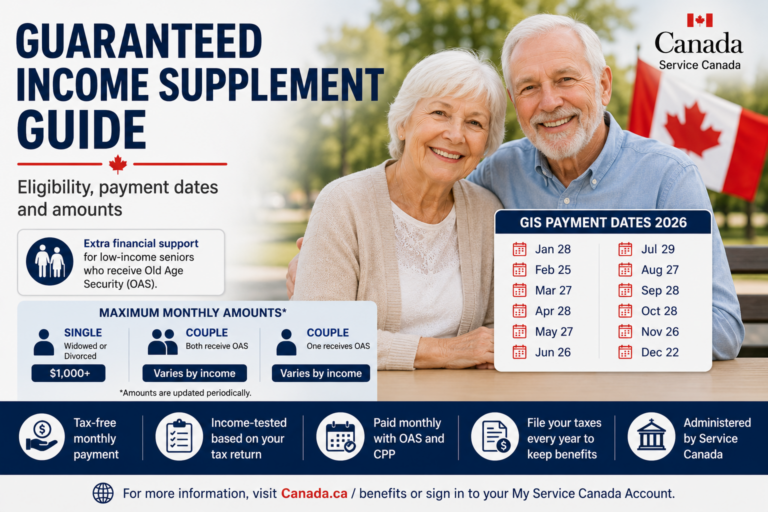
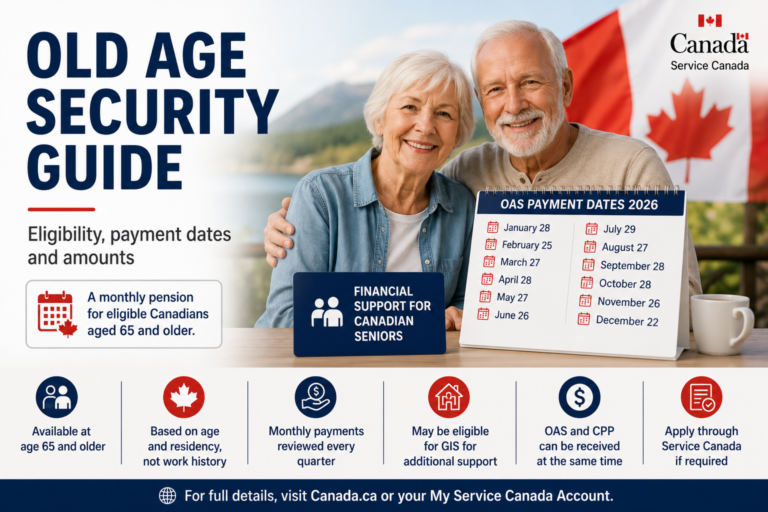
CPP payments are generally issued on the same dates as Old Age Security payments.
| Month | Payment Date |
|---|---|
| January | January 28, 2026 |
| February | February 25, 2026 |
| March | March 27, 2026 |
| April | April 28, 2026 |
| May | May 27, 2026 |
| June | June 26, 2026 |
| July | July 29, 2026 |
| August | August 27, 2026 |
| September | September 28, 2026 |
| October | October 28, 2026 |
| November | November 26, 2026 |
| December | December 22, 2026 |
How to Apply for CPP
CPP retirement benefits are not automatically issued to all Canadians. Many individuals must apply through Service Canada.
- Sign in to My Service Canada Account.
- Complete the CPP retirement pension application.
- Review your contribution history.
- Submit the application.
- Wait for Service Canada to confirm your start date.
What Other CPP Benefits Exist?
The Canada Pension Plan includes several additional benefits beyond retirement pensions.
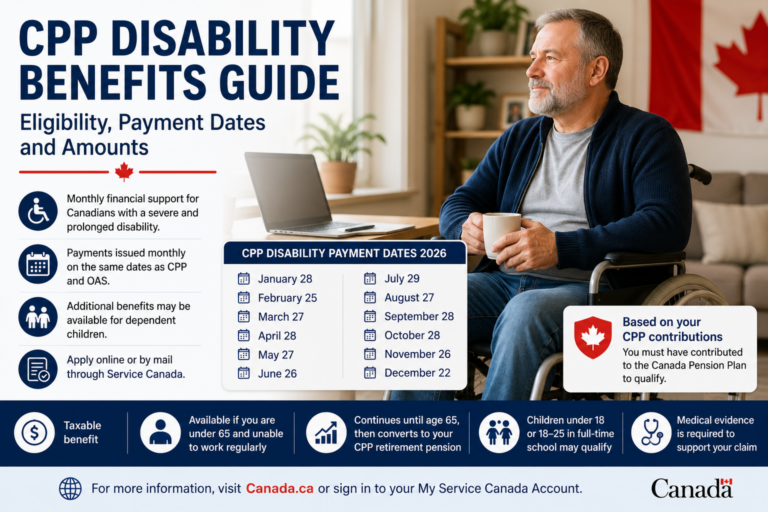
- CPP Disability Benefits.
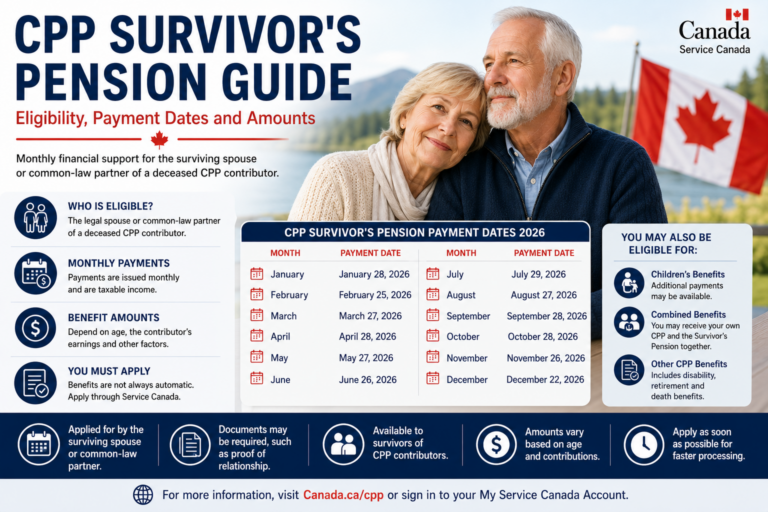
- CPP Survivor’s Pension.
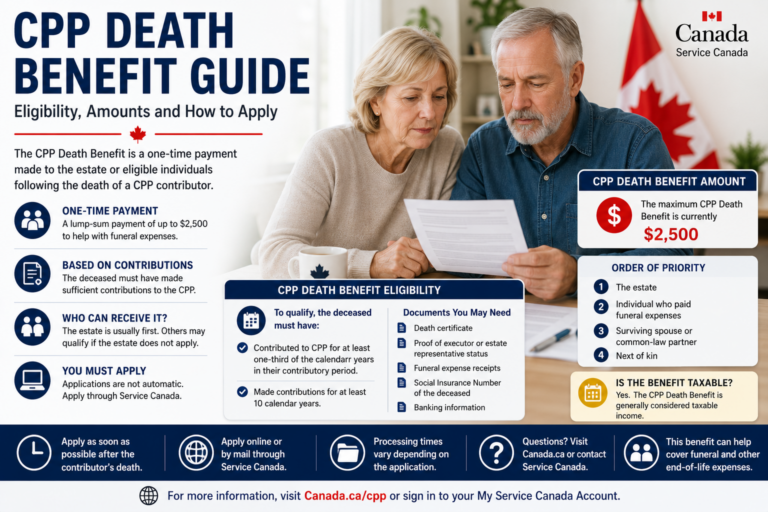
- CPP Death Benefit.
- Children’s Benefits.
- Post-Retirement Benefits.
Can You Work While Receiving CPP?
Yes. Receiving CPP does not prevent you from continuing to work.
Individuals under age 70 who continue working may continue contributing to CPP and qualify for additional Post-Retirement Benefits.
CPP vs OAS
CPP and OAS are often confused, but they are different programs.
| Canada Pension Plan | Old Age Security |
|---|---|
| Based on Contributions | Based on Residency |
| Can Start at Age 60 | Usually Starts at Age 65 |
| Funded by Contributions | Funded by Tax Revenues |
Canada Pension Plan Frequently Asked Questions
Can I receive CPP at age 60?
Yes. However, your monthly payments will be permanently reduced.
Can I delay CPP?
Yes. Delaying CPP up to age 70 increases your monthly payment amount.
Is CPP taxable?
Yes. CPP retirement payments are considered taxable income.
Can I receive CPP and OAS together?
Yes. Many Canadian retirees receive both benefits.
Can I continue working while receiving CPP?
Yes. CPP recipients may continue working and, in some cases, earn additional benefits.
Related Northbly Guides
- Old Age Security Guide
- CPP Disability Benefits Guide
- CPP Survivor’s Pension Guide
- CPP Death Benefit Guide
Official Canada Pension Plan Information
Visit Service Canada to review the latest Canada Pension Plan payment dates, contribution information and retirement pension details.
Visit the Official CPP Website