CPP Death Benefit Guide 2026: Eligibility, Payment Amount and How to Apply
The CPP Death Benefit is a one-time payment that may be available after the death of a contributor to the Canada Pension Plan (CPP). The benefit is intended to provide financial assistance to help cover expenses related to the contributor’s death.
This guide explains who qualifies, how much the benefit is worth in 2026, who can apply, required documents, processing times and how the CPP Death Benefit differs from the CPP Survivor’s Pension.
CPP Death Benefit at a Glance
- One-time taxable payment.
- Paid after the death of an eligible CPP contributor.
- Usually paid to the estate, but other individuals may qualify.
- An application is required.
- Separate from the CPP Survivor’s Pension.
What Is the CPP Death Benefit?
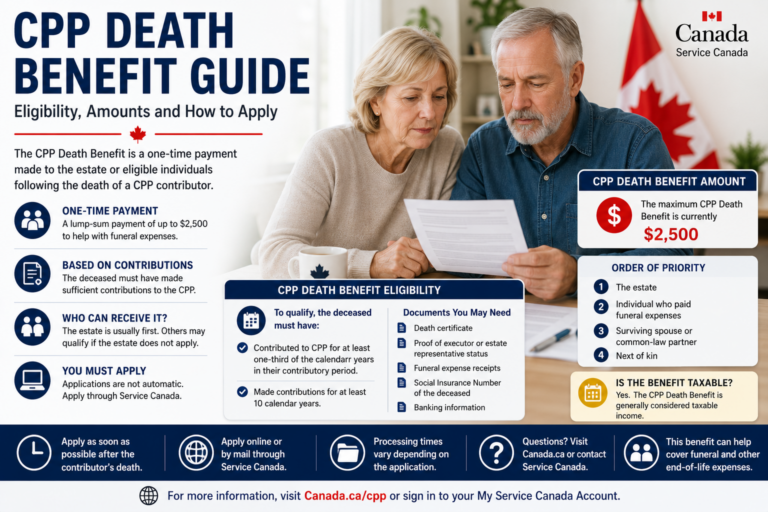
The CPP Death Benefit is a single lump-sum payment made after the death of an individual who made sufficient contributions to the Canada Pension Plan.
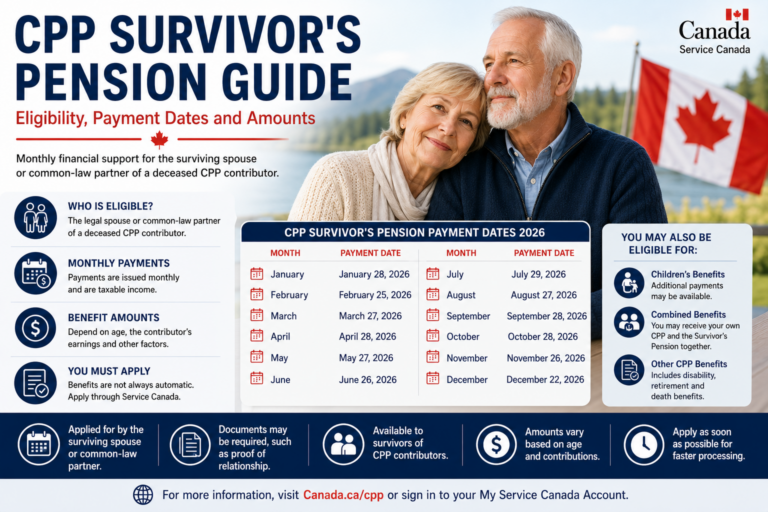
Unlike the CPP Survivor’s Pension, which provides monthly payments, the Death Benefit is only paid once.
Who Is Eligible?
The deceased person must have made enough CPP contributions during their working life.
If the contribution requirements are met, Service Canada determines who should receive the payment according to the following order of priority.
| Priority | Eligible applicant |
|---|---|
| 1 | The estate. |
| 2 | The executor or administrator of the estate. |
| 3 | The person responsible for funeral expenses. |
| 4 | The surviving spouse or common-law partner. |
| 5 | The next of kin. |
CPP Death Benefit Amount for 2026
The CPP Death Benefit is a one-time payment.
| Benefit | Maximum Amount |
|---|---|
| CPP Death Benefit | Up to $5,000 |
The actual payment depends on the deceased contributor’s CPP contribution history and the current program rules.
How to Apply
- Obtain the official CPP Death Benefit application.
- Gather all supporting documents.
- Complete the application.
- Submit it online or by mail to Service Canada.
- Wait for the eligibility decision.
Documents You May Need
- Death certificate.
- Social Insurance Number (SIN) of the deceased.
- Your identification.
- Estate documents, if applicable.
- Proof that you paid funeral expenses, if applicable.
- Banking information for direct deposit.
How Long Does It Take?
Processing times vary depending on the complexity of the application and whether additional documentation is required.
Submitting a complete application helps reduce delays.
CPP Death Benefit vs CPP Survivor’s Pension
| CPP Death Benefit | CPP Survivor’s Pension |
|---|---|
| One-time payment. | Monthly payment. |
| May be paid to the estate. | Paid to an eligible surviving spouse or common-law partner. |
| Application required. | Application required. |
| Helps cover expenses after death. | Provides ongoing income support. |
Frequently Asked Questions
Is the CPP Death Benefit taxable?
Yes. The payment is generally considered taxable income.
Can more than one person receive the Death Benefit?
No. The payment is normally made to one eligible applicant according to the established priority rules.
Does every CPP contributor qualify?
No. The contributor must have made sufficient CPP contributions.
Can I apply online?
In many cases, yes. Applications may be submitted through My Service Canada Account when available.
Can funeral expenses be reimbursed?
The person who paid the funeral expenses may be eligible if there is no estate or executor applying.
Can I receive both the Death Benefit and the Survivor’s Pension?
Yes. They are separate CPP benefits with different eligibility requirements.
Related Northbly Guides
- CPP Survivor’s Pension Guide
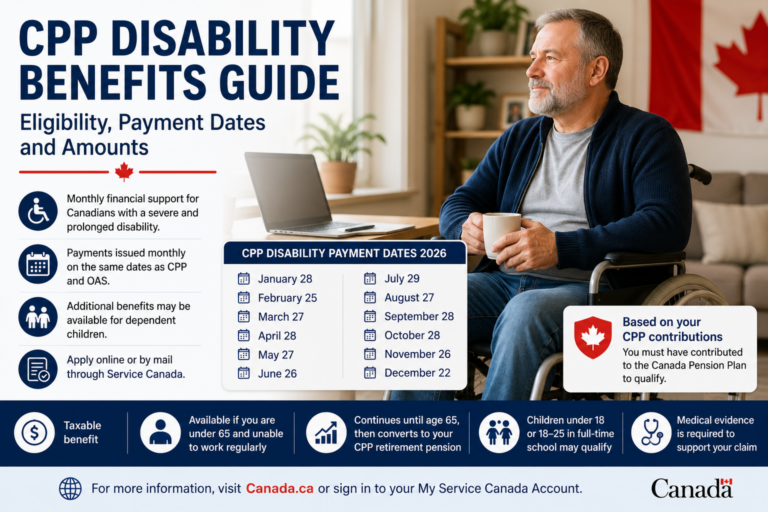
- CPP Disability Benefits Guide
- CPP Payment Dates
- OAS Payment Dates
- Canada Government Payment Dates
- Canada Senior Benefits Guide
Official Government Resources
Visit the official Government of Canada website for current eligibility rules, application forms, payment information and additional guidance.
Official CPP Death Benefit InformationFinal Thoughts
The CPP Death Benefit can help eligible families manage some of the financial costs that arise after the death of a Canada Pension Plan contributor. Applying as soon as possible and providing complete documentation can help avoid unnecessary delays in processing.