How to Claim the Canada Training Credit (CTC): Step-by-Step Guide
The Canada Training Credit (CTC) is a refundable tax credit that helps eligible Canadians recover part of the cost of qualifying tuition and training expenses. Once you meet the eligibility requirements, you can claim the credit when filing your annual income tax return with the Canada Revenue Agency (CRA).
This guide explains how to claim the Canada Training Credit, what documents you need, how the claiming process works and what to do if the CRA requests additional information.
Who Can Claim the Canada Training Credit?
Only taxpayers who meet the Canada Revenue Agency’s eligibility requirements and have an available Canada Training Credit Limit (CTCL) may claim the refundable credit for eligible tuition expenses.
| Requirement | Required? |
|---|---|
| Eligible for the Canada Training Credit | Yes |
| Available Canada Training Credit Limit (CTCL) | Yes |
| Eligible tuition expenses | Yes |
| Income tax return filed | Yes |
What Documents Do You Need?
Before filing your tax return, gather all documents supporting your claim. Keeping complete records helps avoid delays if the Canada Revenue Agency requests additional information.
| Document | Required? |
|---|---|
| Eligible tuition receipt | Yes |
| CRA Notice of Assessment | Yes |
| Income tax information | Yes |
| Supporting educational records | May be required |
Step 1: Verify Your Canada Training Credit Limit
Review your CRA Notice of Assessment or sign in to CRA My Account to confirm that you have an available Canada Training Credit Limit (CTCL). This amount determines the maximum refundable credit you may claim.
| Verification Step | Complete? |
|---|---|
| Review CRA Notice of Assessment | Yes |
| Confirm available CTCL | Yes |
| Verify tuition eligibility | Yes |
| Prepare tax return | Yes |
Step 2: Complete Your Income Tax Return
When preparing your income tax return, enter your eligible tuition expenses and complete the sections related to the Canada Training Credit. The CRA uses the information provided together with your available Canada Training Credit Limit (CTCL) to calculate the refundable credit.
| Step | Required? |
|---|---|
| Report eligible tuition expenses | Yes |
| Complete the required tax forms | Yes |
| Claim the Canada Training Credit | Yes |
| Submit your tax return | Yes |
Step 3: Keep Your Supporting Documents
Although you generally do not need to submit receipts when filing your return, you should keep all supporting documentation in case the Canada Revenue Agency asks you to verify your Canada Training Credit claim.
| Supporting Document | Keep? |
|---|---|
| Official tuition receipt | Yes |
| CRA Notice of Assessment | Yes |
| Proof of payment | Yes |
| Educational institution records | Recommended |
What Happens After You File?
After your income tax return has been processed, the CRA reviews your Canada Training Credit claim. If everything is correct, the refundable credit is included in your Notice of Assessment and any applicable refund calculation.
| CRA Review Step | Occurs? |
|---|---|
| Review eligibility | Yes |
| Verify available CTCL | Yes |
| Calculate refundable credit | Yes |
| Issue Notice of Assessment | Yes |
What If the CRA Requests More Information?
The Canada Revenue Agency may request additional documents to verify your eligibility or your training expenses. Responding promptly and providing complete documentation can help prevent unnecessary delays.
| Action | Recommended? |
|---|---|
| Respond within the deadline | Yes |
| Submit requested documents | Yes |
| Keep copies of all records | Yes |
| Review CRA correspondence carefully | Yes |
Tips for Claiming the Canada Training Credit
Preparing your documentation before filing your tax return helps reduce errors and ensures your Canada Training Credit claim is processed as smoothly as possible.
- Check your Canada Training Credit Limit before filing.
- Keep all tuition receipts and payment records.
- Verify that your educational institution is eligible.
- File your income tax return before the deadline.
- Review your Notice of Assessment after processing.
Can You Amend a Previous Tax Return?
Yes. If you were eligible for the Canada Training Credit (CTC) but did not claim it on your original income tax return, you may be able to request a change to a previously assessed return through the Canada Revenue Agency (CRA), provided you meet the applicable requirements.
The CRA reviews amendment requests individually and may ask for supporting documentation before adjusting your tax return.
| Situation | Possible? |
|---|---|
| Correct a previously filed return | Yes |
| Submit additional supporting documents | May be required |
| CRA review of the request | Yes |
| Updated Notice of Assessment | If approved |
How Can You Track Your Claim?
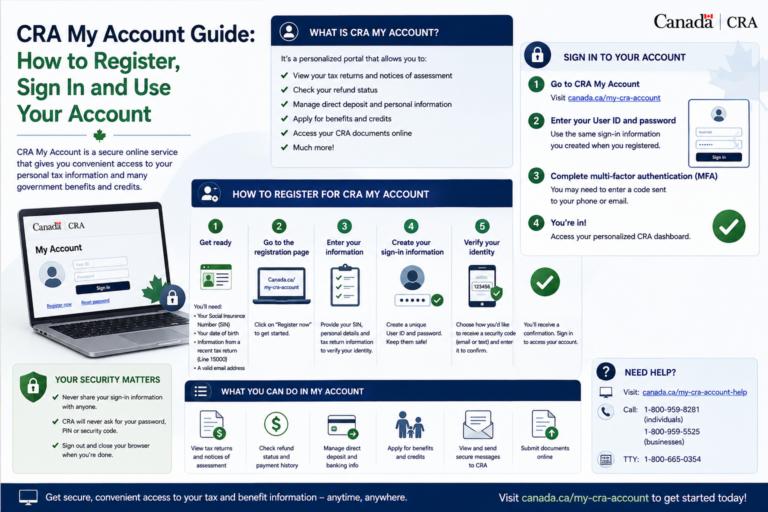
After submitting your income tax return, you can monitor the progress of your Canada Training Credit claim through your CRA My Account. Once processing is complete, your Notice of Assessment will show the final calculation of your refundable credit.
| Information Available | Available Through CRA? |
|---|---|
| Return processing status | Yes |
| Notice of Assessment | Yes |
| Refund information | Yes |
| Canada Training Credit calculation | Yes |
Understanding the Canada Training Credit Claim Process
Claiming the Canada Training Credit is generally straightforward when you meet the eligibility requirements, have an available Canada Training Credit Limit and retain documentation supporting your eligible tuition expenses.
Reviewing your CRA records before filing and keeping complete documentation helps reduce the likelihood of processing delays or requests for additional information.
| Best Practice | Benefit |
|---|---|
| Review your CTCL before filing | Confirm eligibility. |
| Keep tuition receipts | Support your claim. |
| File an accurate tax return | Reduce processing delays. |
| Review your Notice of Assessment | Verify your credit. |
Related Northbly Guides
- Canada Training Credit (CTC) Guide
- Canada Training Credit (CTC) Eligibility
- Tuition Tax Credit Guide
- Tuition Tax Credit Eligibility
- Canada Tax Credits Guide
- Medical Expense Tax Credit (METC) Guide
Frequently Asked Questions
How do I claim the Canada Training Credit (CTC)?
You claim the Canada Training Credit when filing your annual income tax return. You must have an available Canada Training Credit Limit (CTCL) and eligible tuition expenses that qualify under Canada Revenue Agency (CRA) rules.
Do I need to apply separately for the Canada Training Credit?
No. There is no separate application process. Eligible taxpayers claim the refundable credit directly on their income tax return.
What documents do I need?
You should keep your tuition receipts, CRA Notice of Assessment, proof of payment and any other documents supporting your eligible training expenses.
Can I claim the credit without a Canada Training Credit Limit?
No. An available Canada Training Credit Limit (CTCL) is required before you can claim the Canada Training Credit.
Where can I find my Canada Training Credit Limit?
Your available Canada Training Credit Limit appears on your CRA Notice of Assessment and can also be viewed through your CRA My Account.
What happens after I submit my tax return?
The Canada Revenue Agency reviews your claim, verifies your eligibility and calculates the refundable credit before issuing your Notice of Assessment.
Can the CRA ask for additional documents?
Yes. The CRA may request supporting documentation, such as tuition receipts or proof of payment, to verify your Canada Training Credit claim.
Can I correct a previous tax return if I forgot to claim the credit?
Yes. If you were eligible but did not claim the Canada Training Credit, you may be able to request an adjustment to a previously filed income tax return through the Canada Revenue Agency.
Can self-employed individuals claim the Canada Training Credit?
Yes. Self-employed individuals may qualify if they meet the CRA eligibility requirements, have qualifying earned income and an available Canada Training Credit Limit.
How can I track my Canada Training Credit claim?
You can monitor the status of your income tax return and review your Notice of Assessment through your CRA My Account after your return has been processed.
Where can I find official instructions for claiming the Canada Training Credit?
The Canada Revenue Agency provides official guidance explaining eligibility requirements, qualifying expenses and how to claim the Canada Training Credit on your income tax return.
Official Government Resources
For the latest information about claiming the Canada Training Credit, consult the official Government of Canada resources below.
- Canada Training Credit (CRA)
- CRA My Account
- Canada Revenue Agency (CRA)
- Government of Canada – Education and Training
Official Government Information
The Canada Training Credit is administered by the Canada Revenue Agency. Claim procedures, eligibility requirements, qualifying expenses and Canada Training Credit Limit rules may change over time. Always consult the official CRA resources before submitting your income tax return.
Disclaimer
Northbly publishes independent informational content to help readers better understand Canadian tax credits and government financial assistance programs. Although every effort is made to keep this guide accurate and up to date, tax rules, eligibility requirements and CRA procedures may change.
This article is provided for general informational purposes only and should not be considered legal, financial or tax advice. For questions about your Canada Training Credit claim or your personal tax situation, consult the Canada Revenue Agency or a qualified tax professional.