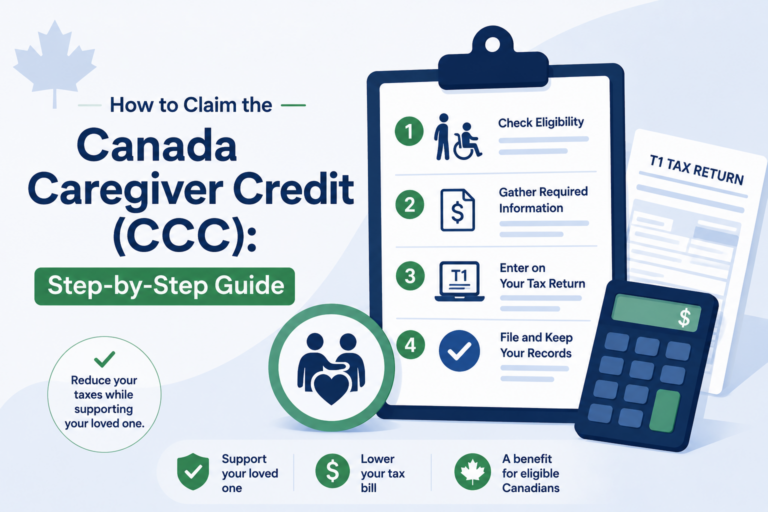
Canada Caregiver Credit (CCC) Eligibility: Income Rules and Requirements
The Canada Caregiver Credit (CCC) is a non-refundable tax credit that helps eligible Canadians who support a spouse, common-law partner or dependant with a physical or mental impairment. Before claiming the credit, you must meet the Canada Revenue Agency (CRA) eligibility requirements.
This guide explains who qualifies for the Canada Caregiver Credit, how eligibility is determined, how income may affect the credit and what requirements must be met before claiming it on your income tax return.
Who Is Eligible for the Canada Caregiver Credit?
The Canada Caregiver Credit is available to taxpayers who provide financial support for an eligible spouse, common-law partner or dependant with a physical or mental impairment. Eligibility depends on the relationship between the taxpayer and the dependant, the dependant’s impairment and the applicable CRA rules.
| Eligibility Requirement | Required? |
|---|---|
| Eligible dependant | Yes |
| Physical or mental impairment | Yes |
| Support provided by the taxpayer | Yes |
| Income tax return filed | Yes |
Does Income Affect Eligibility?
Yes. Although eligibility depends primarily on the dependant’s circumstances, the dependant’s net income may reduce or eliminate the amount of the Canada Caregiver Credit that can be claimed. The CRA applies annual income thresholds when calculating the available credit.
| Income Factor | Affects the Credit? |
|---|---|
| Dependant’s net income | Yes |
| Taxpayer’s eligibility | Yes |
| CRA annual thresholds | Yes |
| CRA assessment | Yes |
Who Can Be an Eligible Dependant?
Depending on your situation, the Canada Caregiver Credit may be available for an eligible spouse or common-law partner, child, parent, grandparent or certain other qualifying relatives who have a physical or mental impairment recognized under CRA rules.
| Potential Eligible Person | May Qualify? |
|---|---|
| Spouse or common-law partner | Yes |
| Parent or grandparent | Yes |
| Child or grandchild | Yes |
| Other qualifying relatives | May qualify |
Can Your Canada Caregiver Credit Eligibility Change?
Yes. Your eligibility for the Canada Caregiver Credit (CCC) may change from one tax year to another if the dependant’s circumstances, impairment status or net income changes. The Canada Revenue Agency (CRA) reviews eligibility each tax year based on current information.
Qualifying for the credit in one year does not automatically guarantee eligibility in future years.
| Factor | May Affect Eligibility? |
|---|---|
| Dependant’s net income | Yes |
| Physical or mental impairment | Yes |
| Relationship to the dependant | Yes |
| Annual CRA assessment | Yes |
Can More Than One Person Claim the Credit?
In some situations, more than one individual may provide care for the same dependant. However, the Canada Revenue Agency applies specific rules regarding how the Canada Caregiver Credit may be shared or claimed to prevent duplicate claims.
| Situation | Possible? |
|---|---|
| Single caregiver | Yes |
| Multiple caregivers | May be possible |
| Shared claim under CRA rules | May apply |
| Duplicate claims | Not permitted |
What Documentation May Be Required?
Depending on your circumstances, the CRA may request documentation confirming the dependant’s impairment or your eligibility to claim the Canada Caregiver Credit. Keeping complete records helps support your claim if verification is required.
| Document | May Be Required? |
|---|---|
| Medical certification | Yes |
| Supporting medical records | May be required |
| Relationship documentation | May be required |
| Income tax records | Yes |
What If You Do Not Qualify?
If you do not meet the Canada Caregiver Credit eligibility requirements, you cannot claim the credit for that tax year. However, changes to your dependant’s circumstances or your own situation may affect eligibility in future years.
| Situation | Result |
|---|---|
| Eligible dependant | Credit may be claimed. |
| Requirements not met | Credit cannot be claimed. |
| Documentation available | Recommended. |
| CRA review | May occur. |
Tips for Maintaining Eligibility
Understanding the CRA requirements and maintaining accurate documentation can help ensure your Canada Caregiver Credit claim is processed successfully.
- Keep medical documentation supporting the impairment.
- Review the dependant’s income each year.
- Retain supporting tax records.
- Review CRA eligibility requirements before filing.
- File your income tax return before the deadline.
Who Cannot Claim the Canada Caregiver Credit?
Not every taxpayer who provides care qualifies for the Canada Caregiver Credit (CCC). If the dependant does not meet the Canada Revenue Agency (CRA) eligibility requirements or the necessary supporting conditions are not satisfied, the credit generally cannot be claimed.
Reviewing the CRA eligibility criteria before filing your income tax return helps reduce the risk of reassessments or denied claims.
| Situation | Eligible? |
|---|---|
| Eligible dependant with a qualifying impairment | Yes |
| Dependant does not meet CRA requirements | No |
| Supporting documentation available | Yes |
| Requirements not satisfied | No |
How Can You Verify Your Eligibility?
You can verify your eligibility by reviewing the CRA guidance for the Canada Caregiver Credit, confirming the dependant’s circumstances and ensuring you have the documentation needed to support your claim if requested.
| Document or Resource | Helpful? |
|---|---|
| CRA eligibility guidance | Yes |
| Medical documentation | Yes |
| Relationship records | May be required |
| Income tax records | Yes |
Understanding Canada Caregiver Credit Eligibility
The Canada Caregiver Credit helps recognize the financial responsibilities of Canadians who support eligible family members with physical or mental impairments. While eligibility depends primarily on the dependant’s situation, the CRA also considers income thresholds and other program requirements when calculating the available credit.
Reviewing the eligibility rules each year and maintaining complete documentation can help ensure your claim is accurate and reduce the likelihood of delays during CRA processing.
| Best Practice | Benefit |
|---|---|
| Keep medical documentation | Support your claim. |
| Review CRA eligibility rules annually | Avoid filing errors. |
| Retain tax and income records | Prepare for CRA review. |
| File your tax return on time | Claim available tax credits. |
Related Northbly Guides
- Canada Caregiver Credit (CCC) Guide
- How to Claim the Canada Caregiver Credit
- Disability Tax Credit (DTC) Guide
- Medical Expense Tax Credit (METC) Guide
- Canada Tax Credits Guide
- Canada Training Credit (CTC) Guide
Frequently Asked Questions
What is the Canada Caregiver Credit (CCC)?
The Canada Caregiver Credit (CCC) is a non-refundable federal tax credit that helps eligible Canadians who provide financial support to a spouse, common-law partner or dependant with a physical or mental impairment.
Who qualifies for the Canada Caregiver Credit?
Taxpayers who support an eligible dependant with a qualifying physical or mental impairment may qualify if they meet the Canada Revenue Agency (CRA) eligibility requirements.
Does income affect the Canada Caregiver Credit?
Yes. The dependant’s net income may reduce or eliminate the amount of the credit that can be claimed. The CRA applies annual income thresholds when calculating the available Canada Caregiver Credit.
Who can be an eligible dependant?
Depending on your circumstances, an eligible dependant may include your spouse or common-law partner, child, parent, grandparent or certain other qualifying relatives recognized under CRA rules.
Can more than one person claim the Canada Caregiver Credit?
In some situations, yes. If multiple individuals support the same dependant, the CRA has rules governing how the credit may be shared or claimed to prevent duplicate claims.
Do I need medical documentation?
Yes. The Canada Revenue Agency may require medical certification or other documentation confirming the dependant’s physical or mental impairment when reviewing your claim.
Do I need to submit supporting documents with my tax return?
Generally, no. However, you should keep all supporting documentation because the CRA may request it to verify your Canada Caregiver Credit claim.
Can my eligibility change each year?
Yes. Changes to the dependant’s impairment, income, relationship or other eligibility factors may affect whether you qualify for the Canada Caregiver Credit in a future tax year.
What happens if the CRA reviews my claim?
The CRA may request additional documentation, including medical records or proof of your relationship to the dependant. Providing complete and accurate information helps support your claim.
Can I claim the Canada Caregiver Credit and other tax credits?
Yes. Depending on your circumstances, you may also qualify for other federal tax credits, such as the Disability Tax Credit or the Medical Expense Tax Credit, provided you meet the eligibility requirements for each program.
Where can I find official Canada Caregiver Credit eligibility information?
The Canada Revenue Agency publishes official guidance explaining eligibility requirements, qualifying dependants, income rules and how the Canada Caregiver Credit is calculated.
Official Government Resources
For the latest information about Canada Caregiver Credit eligibility, consult the official Government of Canada resources below.
- Canada Caregiver Credit (CRA)
- About Your Income Tax Return (CRA)
- Canada Revenue Agency (CRA)
- Government of Canada – Disability Benefits
Official Government Information
The Canada Caregiver Credit is administered by the Canada Revenue Agency. Eligibility requirements, qualifying dependant rules, income thresholds and claim procedures may change over time. Always consult the official CRA resources before claiming the credit on your income tax return.
Disclaimer
Northbly publishes independent informational content to help readers better understand Canadian tax credits and government financial assistance programs. Although every effort is made to keep this guide accurate and up to date, tax rules, eligibility requirements and CRA procedures may change.
This article is provided for general informational purposes only and should not be considered legal, financial or tax advice. For questions about your Canada Caregiver Credit eligibility or your personal tax situation, consult the Canada Revenue Agency or a qualified tax professional.