Disability Tax Credit (DTC) Eligibility Guide: Who Qualifies and Requirements
The Disability Tax Credit (DTC) is a non-refundable tax credit that helps reduce the amount of income tax paid by eligible Canadians living with a severe and prolonged physical or mental impairment. Approval for the DTC may also provide access to other federal and provincial disability programs, including the Canada Disability Benefit (CDB).
This guide explains who qualifies for the Disability Tax Credit, the eligibility requirements, how eligibility is determined and the key conditions applicants should understand before applying.
Who Is Eligible for the Disability Tax Credit?
The Disability Tax Credit is available to eligible Canadians whose physical or mental impairment meets the criteria established by the Canada Revenue Agency (CRA). Eligibility depends on how the impairment affects everyday activities rather than on the medical diagnosis alone.
Each application is reviewed individually based on the medical information provided and the eligibility requirements set out by the CRA.
| Requirement | Generally Required? |
|---|---|
| Severe and prolonged impairment | Yes |
| Significant impact on daily living | Yes |
| Medical certification | Yes |
| CRA approval | Yes |
What Is Considered a Severe and Prolonged Impairment?
Generally, the impairment must be expected to last for an extended period and significantly restrict one or more basic activities of daily living, according to the criteria established by the CRA.
| Requirement | Status |
|---|---|
| Long-term impairment | Required |
| Severe limitation | Required |
| Medical certification | Required |
| CRA assessment | Required |
Who Can Certify Your Disability?
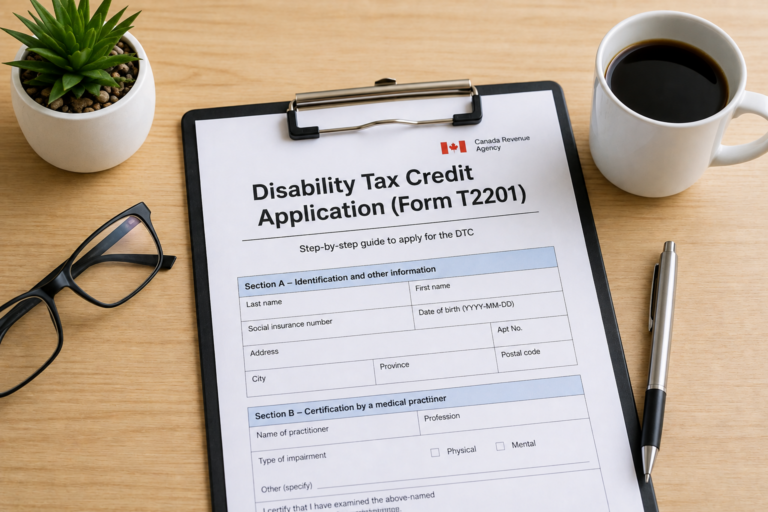
A qualified medical practitioner must complete and certify the medical portion of your Disability Tax Credit application. The Canada Revenue Agency uses this information to determine whether you meet the eligibility requirements.
| Professional | May Certify? |
|---|---|
| Medical doctor | Yes |
| Nurse practitioner | Yes, where permitted |
| Other authorized specialists | Depending on the impairment |
| CRA review | Always required |
Why Is the Disability Tax Credit Important?
In addition to reducing income tax, approval for the Disability Tax Credit may allow eligible Canadians to access other important government programs and benefits, including the Canada Disability Benefit (CDB) and other disability-related supports.
Can Your Eligibility Change Over Time?
Yes. Your eligibility for the Disability Tax Credit may change if your medical condition improves, your impairment no longer meets the CRA requirements or your approval period expires. In some cases, the Canada Revenue Agency may request updated medical information.
Keeping your medical records current and responding promptly to CRA requests can help avoid interruptions to your eligibility.
| Change | May Affect Eligibility? |
|---|---|
| Medical condition improves | Yes |
| Approval period expires | Yes |
| Updated medical assessment | Yes |
| CRA reassessment | May apply |
Do You Need to File an Income Tax Return?
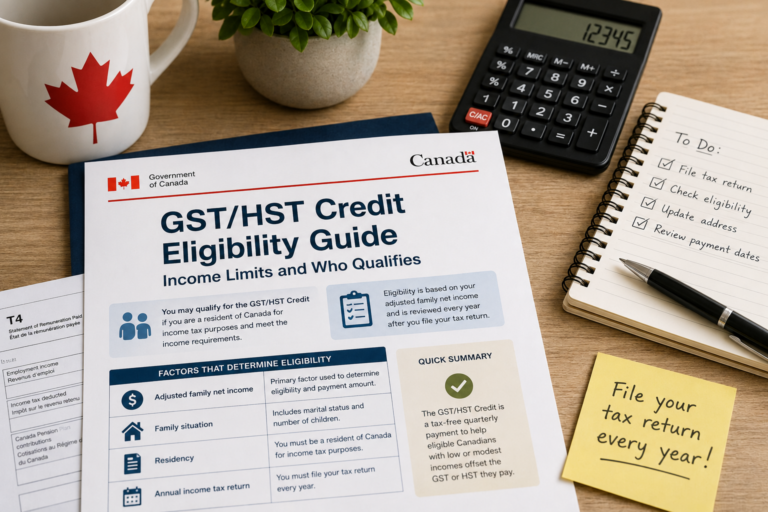
Yes. Although the Disability Tax Credit is a non-refundable tax credit, filing your annual income tax return is generally necessary to claim the credit and access related federal programs that depend on your tax information.
| Requirement | Generally Required? |
|---|---|
| Annual income tax return | Yes |
| Current tax information | Yes |
| CRA records | Yes |
| Updated personal information | Recommended |
Common Reasons Applicants Do Not Qualify
Not every Disability Tax Credit application is approved. The CRA reviews both the medical certification and the impact of the impairment on daily living before making a decision.
| Reason | Possible Solution |
|---|---|
| Condition does not meet CRA criteria | Review eligibility requirements. |
| Medical information incomplete | Submit complete documentation. |
| Impairment not considered severe | Provide additional medical evidence. |
| Application incomplete | Review all sections before submitting. |
Benefits of Being Approved for the DTC
Approval for the Disability Tax Credit may provide access to additional federal and provincial programs beyond the tax credit itself, depending on your personal circumstances.
| Potential Benefit | May Be Available? |
|---|---|
| Reduced income tax | Yes |
| Canada Disability Benefit (CDB) | May qualify |
| Registered Disability Savings Plan (RDSP) | May qualify |
| Other disability programs | May apply |
Tips Before Applying
Preparing your application carefully and ensuring your medical information is complete can improve the application process and reduce unnecessary delays.
- Review the CRA eligibility requirements carefully.
- Work with your medical practitioner when completing the application.
- Provide complete medical information.
- File your income tax return every year.
- Keep copies of all submitted documents.
Can Newcomers to Canada Qualify for the Disability Tax Credit?
Yes. Newcomers to Canada may qualify for the Disability Tax Credit (DTC) if they meet the eligibility requirements established by the Canada Revenue Agency (CRA). The same medical criteria apply regardless of how long you have lived in Canada.
Applicants must provide the required medical certification and have their application approved by the CRA before they can claim the Disability Tax Credit.
| Requirement | Generally Required? |
|---|---|
| Eligible medical impairment | Yes |
| Medical certification | Yes |
| CRA approval | Yes |
| Meet all eligibility rules | Yes |
How Can You Confirm Your Eligibility?
Before applying, review the official Disability Tax Credit eligibility criteria, speak with your medical practitioner and confirm that your condition meets the CRA requirements for a severe and prolonged impairment.
| Eligibility Check | Recommended? |
|---|---|
| Review CRA eligibility rules | Yes |
| Consult your medical practitioner | Yes |
| Gather medical documentation | Yes |
| File your income tax return | Yes |
Understanding Disability Tax Credit Eligibility
The Disability Tax Credit is intended to support Canadians whose severe and prolonged impairment significantly affects their ability to perform basic activities of daily living. Eligibility is based on medical evidence and the CRA’s assessment of how your condition impacts your daily life.
Obtaining DTC approval may also open access to additional federal programs, including the Canada Disability Benefit (CDB) and other disability-related supports.
| Best Practice | Benefit |
|---|---|
| Provide complete medical information | Supports CRA assessment. |
| Work closely with your healthcare provider | Improves application accuracy. |
| Review CRA eligibility criteria | Confirm you qualify before applying. |
| Keep your tax information current | Supports future disability programs. |
Related Northbly Guides
- How to Apply for the Disability Tax Credit (DTC)
- Canada Disability Benefit (CDB) Eligibility Guide
- How to Apply for the Canada Disability Benefit (CDB)
- Canada Disability Benefit (CDB) Payment Amounts
- Disability Tax Credit (DTC) Guide
- Canada Tax Credits Guide
Frequently Asked Questions
Who qualifies for the Disability Tax Credit?
To qualify for the Disability Tax Credit (DTC), you must generally have a severe and prolonged physical or mental impairment that significantly affects one or more basic activities of daily living. Your condition must also be certified by an authorized medical practitioner and approved by the Canada Revenue Agency (CRA).
Does having a medical condition automatically qualify me?
No. The CRA evaluates how your impairment affects your daily life rather than the medical diagnosis itself. Having a condition does not automatically qualify you for the Disability Tax Credit.
How long must my impairment last?
Generally, the impairment must be prolonged and expected to last for an extended period according to the eligibility criteria established by the CRA.
Who can certify my Disability Tax Credit application?
An authorized medical practitioner, such as a physician, nurse practitioner or other qualified healthcare professional (depending on the impairment), must complete the medical certification section of your application.
Do I need CRA approval?
Yes. Even if your medical practitioner certifies your impairment, the Canada Revenue Agency must review and approve your application before you qualify for the Disability Tax Credit.
Can newcomers to Canada qualify?
Yes. Newcomers may qualify if they meet the CRA eligibility requirements and their Disability Tax Credit application is approved.
Can my eligibility change?
Yes. Eligibility may change if your medical condition improves, your approval period expires or the CRA requests updated medical information during a reassessment.
Do I need to file an income tax return?
Yes. Filing your annual income tax return is generally necessary to claim the Disability Tax Credit and may also be required for access to related disability programs.
What programs can DTC approval help me access?
Depending on your circumstances, DTC approval may help you qualify for programs such as the Canada Disability Benefit (CDB), the Registered Disability Savings Plan (RDSP) and other disability-related supports.
Can my application be denied?
Yes. Applications may be denied if the CRA determines that the impairment does not meet the eligibility requirements or if sufficient medical information has not been provided.
Can I reapply if my application is denied?
Yes. If your circumstances change or additional medical evidence becomes available, you may be able to submit a new application or follow the CRA’s review and objection process where applicable.
Where can I find official Disability Tax Credit eligibility information?
The Canada Revenue Agency publishes official guidance explaining Disability Tax Credit eligibility requirements, medical criteria and the application process.
Official Government Resources
For the latest information about Disability Tax Credit eligibility, consult the official Government of Canada resources below.
- Disability Tax Credit (DTC)
- Form T2201 – Disability Tax Credit Certificate
- Canada Revenue Agency (CRA)
- Canada Disability Benefit (CDB)
Official Government Information
The Disability Tax Credit is administered by the Canada Revenue Agency. Eligibility requirements, medical certification rules and application procedures may change over time. Always consult official Government of Canada resources for the latest information before applying.
Disclaimer
Northbly publishes independent informational content to help readers better understand Canadian tax credits and government benefits. Although every effort is made to keep this guide accurate and up to date, government programs, eligibility requirements and administrative procedures may change.
This article is provided for general informational purposes only and should not be considered legal, financial, tax or medical advice. For questions about your individual Disability Tax Credit eligibility, consult the Canada Revenue Agency or a qualified healthcare professional.