Benefits vs Tax Credits in Canada: What’s the Difference?
Government benefits and tax credits can both provide financial support to people in Canada, but they do not always work in the same way.
A benefit may be paid monthly, quarterly or as a one-time amount. A tax credit normally reduces income tax or creates an amount payable through the tax return. However, some programs combine characteristics of both, which is why terms such as benefit, credit, rebate, deduction and refund are often confused.
Benefits vs Tax Credits at a Glance
| Feature | Government Benefits | Tax Credits |
|---|---|---|
| Main purpose | Provide financial assistance, services or income support | Reduce tax or provide tax-based financial support |
| How received | Direct deposit, cheque, reimbursement or government-funded service | Through a tax return, advance payment or CRA benefit payment |
| Tax return required | Depends on the program | Normally required |
| Can be income-tested | Yes | Yes |
| Can be taxable | Yes, although many benefits are tax-free | Depends on the credit and program rules |
| Application required | Often, but not always | Usually claimed or calculated through a tax return |
| Payment frequency | Monthly, quarterly, annually or one time | Tax refund, periodic payment or advance payment |
| Administered by | CRA, Service Canada or another government department | Usually the CRA for federal tax credits |
What Is a Government Benefit?
A government benefit is financial assistance, income replacement, healthcare coverage, a reimbursement or another form of support provided to eligible people.
Benefits may be administered by:
- The Canada Revenue Agency.
- Service Canada.
- Employment and Social Development Canada.
- Health Canada.
- Veterans Affairs Canada.
- A provincial or territorial government.
- A municipal or Indigenous government.
The word “benefit” covers many different programs. Some benefits replace employment income, while others help with children, disabilities, housing, retirement, dental care or essential living expenses.
Common Examples of Benefits in Canada
| Benefit | Type of Support | Typical Administrator |
|---|---|---|
| Canada Child Benefit | Monthly tax-free support for eligible families | CRA |
| Canada Disability Benefit | Income-tested support for eligible working-age people with disabilities | Service Canada |
| Employment Insurance | Temporary income replacement | Service Canada |
| Canada Pension Plan | Contribution-based retirement, disability and survivor benefits | Service Canada |
| Old Age Security | Residence-based pension for eligible seniors | Service Canada |
| Guaranteed Income Supplement | Tax-free support for low-income OAS recipients | Service Canada |
| Canadian Dental Care Plan | Coverage for eligible oral-health services | Government of Canada and participating providers |
| Provincial housing assistance | Rent support, subsidized housing or housing supplements | Province, territory or local authority |
What Is a Tax Credit?
A tax credit is an amount used in the income tax system to reduce tax or provide tax-based financial assistance.
There are two main types:
- Non-refundable tax credits.
- Refundable tax credits.
The difference is important. A non-refundable credit can generally reduce tax to zero but does not normally create an additional refund. A refundable credit may create or increase a refund even when the taxpayer owes little or no income tax.
What Is a Non-Refundable Tax Credit?
A non-refundable tax credit reduces the amount of income tax that a person must pay.
If the available credit is greater than the person’s tax liability, the unused portion generally does not produce a cash payment unless the specific credit can be transferred or carried forward.
For example, if someone owes $600 in federal income tax and has a non-refundable credit worth $800 in actual tax reduction, the credit may reduce the federal tax to zero. The remaining $200 would not normally be paid as a refund solely because of that credit.
Common federal non-refundable credits include:
- The basic personal amount.
- The age amount.
- The disability tax credit.
- The Canada caregiver credit.
- The medical expense tax credit in many circumstances.
- The home accessibility tax credit.
- The home buyers’ amount.
- The pension income amount.
- Tuition amounts.
- Charitable donation tax credits.
- Volunteer firefighters and search and rescue volunteers amounts.
Some unused amounts may be transferable to an eligible spouse, common-law partner or supporting family member. Others may be carried forward to a future year. The rules differ by credit.
What Is a Refundable Tax Credit?
A refundable tax credit may result in money being paid to the taxpayer even when the person does not owe income tax.
Refundable credits can:
- Reduce income tax payable.
- Increase a tax refund.
- Create a refund when no tax is otherwise payable.
- Be issued partly through advance payments.
Examples include:
- The Canada Workers Benefit.
- The refundable medical expense supplement.
- The multigenerational home renovation tax credit.
- Certain provincial or territorial refundable tax credits.
The eligibility rules, income limits and maximum amounts vary. A credit being refundable does not mean everyone receives the maximum amount.
Is a Refundable Tax Credit the Same as a Benefit?
Not exactly, although the practical result can be similar.
A refundable tax credit is created through tax legislation and is usually calculated through the income tax return. A benefit is a broader form of government assistance that may or may not be connected to the tax system.
The terminology sometimes overlaps. The CRA may administer regular “benefit and credit payments,” and some tax-based programs provide money throughout the year instead of waiting until the tax return is assessed.
The important questions are:
- Is a tax return required?
- Does the program reduce tax or provide a payment?
- Is a separate application required?
- Is the amount taxable?
- How often is it paid?
- Which government department administers it?
Benefits, Credits, Deductions and Refunds Compared
| Term | How It Works | Possible Result |
|---|---|---|
| Benefit | Provides financial assistance, coverage or income support | Payment, reimbursement or service |
| Non-refundable tax credit | Reduces tax payable, generally only to zero | Lower tax or larger refund of tax already paid |
| Refundable tax credit | Reduces tax and may create an additional refund | Lower tax, refund or payment |
| Tax deduction | Reduces the income on which tax is calculated | Lower taxable income and potentially lower tax |
| Tax refund | Returns an overpayment or refundable amount after assessment | Deposit or cheque from the CRA |
| Rebate | Returns part of an eligible cost or tax paid | Payment, credit or reduced purchase cost |
What Is a Tax Deduction?
A tax deduction is not the same as a tax credit.
A deduction reduces net income or taxable income before income tax is calculated. Its value depends partly on the taxpayer’s income and marginal tax rate.
Examples may include:
- Eligible RRSP contributions.
- Child care expenses.
- Eligible moving expenses.
- Union, professional or similar dues.
- Certain employment expenses.
- Eligible support payments.
- The northern residents deductions.
- The labour mobility deduction for tradespeople.
A tax credit is generally applied later in the tax calculation. This is why a deduction of $1,000 does not necessarily reduce tax by $1,000.
What Is a Tax Refund?
A tax refund is money returned after the CRA assesses a tax return and determines that the taxpayer paid or had withheld more than the final amount owed.
A refund may result from:
- Income tax deducted from employment income.
- Instalments or other tax payments.
- Deductions that reduced taxable income.
- Non-refundable credits that reduced tax payable.
- Refundable tax credits.
- Adjustments to a previous tax return.
Receiving a refund does not automatically mean that a person received a government benefit. It may simply mean that too much tax was paid during the year.
Do Benefits Require a Tax Return?
Many income-tested benefits require an annual tax return because the CRA or another department uses tax information to confirm income, marital status and family circumstances.
Filing a return may be necessary even when the person:
- Had no employment income.
- Owes no income tax.
- Received only pension income.
- Received social assistance.
- Was a student for the full year.
- Had income below the basic personal amount.
CRA-administered benefit and credit amounts are often recalculated in July using information from the previous year’s tax return.
Failing to file may delay or stop payments such as the Canada Child Benefit and other income-tested federal, provincial or territorial amounts administered by the CRA.
Do Tax Credits Require a Separate Application?
Many tax credits are claimed directly on the annual income tax return. Others require approval, certification or supporting documents before the amount can be claimed.
For example:
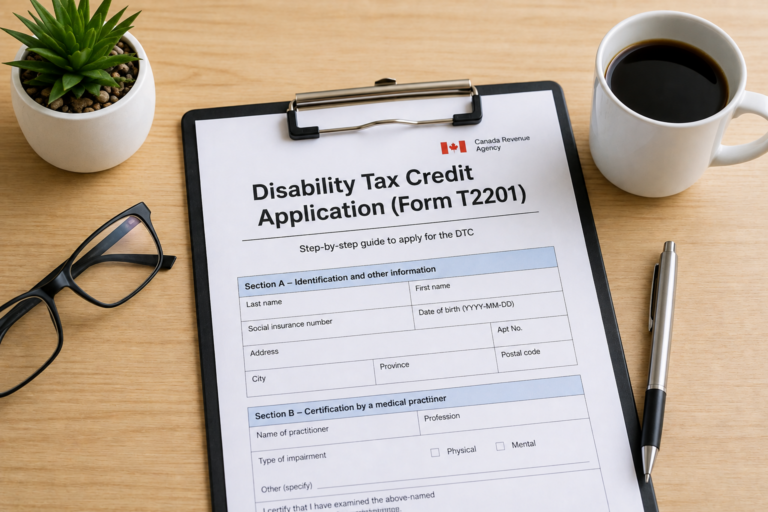
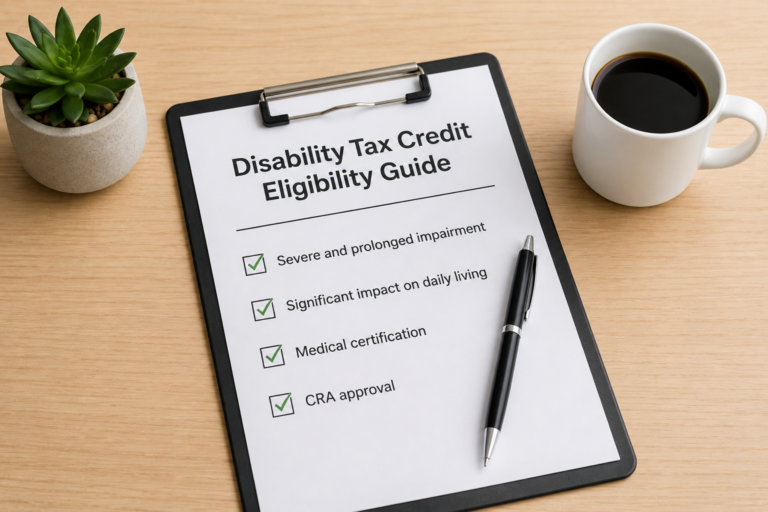
- The disability tax credit requires an approved application and medical certification.
- Medical expense claims require eligible expenses and supporting receipts.
- The home accessibility tax credit requires qualifying renovation expenses.
- The Canada Workers Benefit is normally calculated through the tax return.
- Tuition claims use information from an eligible educational institution.
A person should not assume that filing a tax return automatically claims every available credit. Tax software may identify common credits, but the taxpayer remains responsible for providing accurate information.
Do Benefits Require a Separate Application?
Some benefits require a specific application, while others are calculated automatically after a tax return is filed.
| Program | Typical Access Method |
|---|---|
| Canada Child Benefit | Apply after a child’s birth, when taking responsibility for a child or after becoming eligible |
| Canada Workers Benefit | Claimed through the income tax return, with advance payments when eligible |
| Employment Insurance | Separate application through Service Canada |
| Canada Pension Plan retirement pension | Separate application required |
| Old Age Security | Automatic enrolment for some people; application required for others |
| Guaranteed Income Supplement | May be automatically assessed or require an application and income information |
| Canada Disability Benefit | Application required after meeting the program’s eligibility conditions |
| Canadian Dental Care Plan | Application required |
Are Government Benefits Taxable?
Some benefits are taxable and others are tax-free.
Taxable benefits may need to be reported as income and may affect:
- The amount of income tax owed.
- Eligibility for income-tested benefits.
- The Guaranteed Income Supplement.
- The OAS recovery tax.
- Provincial and territorial assistance.
- Other credits calculated using family net income.
| Program | General Tax Treatment |
|---|---|
| Canada Child Benefit | Tax-free |
| Employment Insurance benefits | Taxable |
| CPP retirement pension | Taxable |
| Old Age Security | Taxable |
| Guaranteed Income Supplement | Not taxable |
| Canada Disability Benefit | Not taxable under the federal program rules |
| Social assistance payments | Generally reported but commonly offset by a deduction in the tax calculation |
| Workers’ compensation benefits | Generally reported but commonly offset by a deduction in the tax calculation |
Tax treatment can change and may differ for provincial or territorial programs. Recipients should review the relevant tax slip and official program instructions.
Are Tax Credits Taxable?
Claiming a tax credit generally does not create taxable income merely because the credit reduced tax or generated a refund.
However, the rules can be more complex when:
- A reimbursement relates to an expense previously claimed.
- A business or rental expense is reimbursed.
- A provincial program has separate tax treatment.
- A grant or rebate reduces the cost of an asset.
- The same expense could otherwise be claimed under another credit or deduction.
Taxpayers should avoid claiming the same expense twice unless the applicable rules expressly permit it.
How Income Affects Benefits and Tax Credits
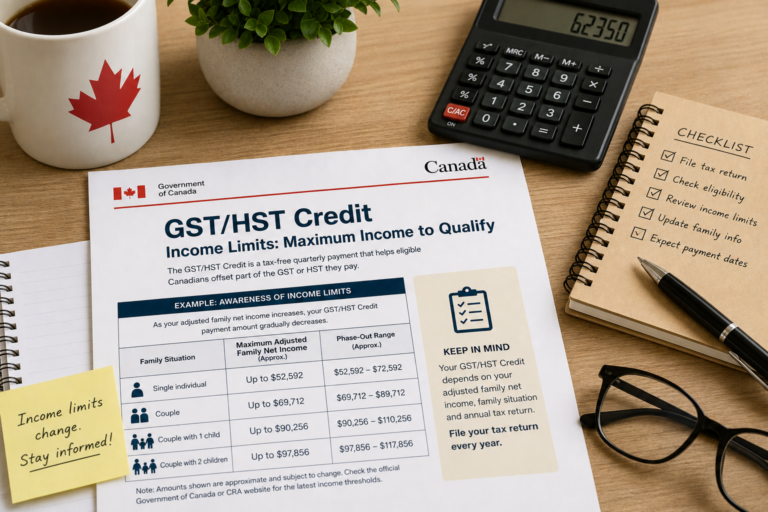
Many Canadian benefits and refundable credits are income-tested.
The calculation may use:
- Individual net income.
- Adjusted family net income.
- Combined income with a spouse or common-law partner.
- Income from the previous calendar year.
- Current-year estimated income in limited circumstances.
- Worldwide income for certain eligibility periods.
As income rises, a payment may:
- Remain unchanged until a threshold is reached.
- Decrease gradually.
- Become unavailable.
- Be recovered through the tax system.
Income thresholds are program-specific. Qualifying for one benefit does not guarantee eligibility for another.
Why Marital Status Matters
Many benefits and refundable tax credits use family income rather than only the applicant’s income.
Marriage, separation, divorce, reconciliation or the death of a spouse can change:
- Benefit eligibility.
- Payment amounts.
- Which person receives a child-related payment.
- Income thresholds.
- The ability to transfer certain tax-credit amounts.
The CRA should normally be informed of a marital-status change by the end of the month following the month in which the change occurred.
A separation is generally recognized for benefit purposes after the couple has lived apart for at least 90 consecutive days because of a relationship breakdown. When recognized, the effective date relates back to the date the separation began.
Why Having No Tax Payable Does Not Mean There Is No Reason to File
Someone who owes no income tax may still qualify for valuable benefits or refundable tax credits.
Filing can help establish or maintain access to:
- Canada Child Benefit payments.
- Canada Groceries and Essentials Benefit payments, when eligible.
- The Canada Workers Benefit.
- Provincial and territorial credits.
- Income-tested retirement benefits.
- Certain housing, energy and affordability programs.
A tax return also creates an official income record that other government programs may use to verify eligibility.
Benefits Paid by the CRA vs Service Canada
| CRA-Administered Programs | Service Canada Programs |
|---|---|
| Canada Child Benefit | Employment Insurance |
| Canada Groceries and Essentials Benefit | Canada Pension Plan |
| Canada Workers Benefit and advance payments | Old Age Security |
| Tax refunds and tax credits | Guaranteed Income Supplement |
| Related provincial and territorial payments | Canada Disability Benefit |
| Individual income tax accounts | Social Insurance Number services |
Knowing which department administers a program helps applicants use the correct online account and contact number.
CRA My Account and My Service Canada Account are separate services. Information available in one account may not appear in the other.
How Benefits and Tax Credits Are Paid
Payments may be issued through:
- Direct deposit.
- A cheque sent by mail.
- A tax refund.
- Monthly benefit payments.
- Quarterly benefit payments.
- Advance payments.
- Reimbursement after an eligible expense.
- Direct coverage of an eligible service.
Different programs have different payment schedules. A person who receives several benefits should not expect every amount to arrive on the same day.
Advance Payments vs Tax-Time Payments
Some tax-based support is paid before the final annual tax return calculation.
Advance payments provide money during the year based on the most recent income information available. The final entitlement may later be confirmed or adjusted after a tax return is assessed.
A change in income or family circumstances may result in:
- A larger future payment.
- A smaller future payment.
- A payment stopping.
- An overpayment that must be repaid.
- An additional amount issued after reassessment.
Recipients should keep their personal information and tax filings current to reduce payment errors.
Can You Receive Multiple Benefits and Tax Credits?
Yes. A person may qualify for several programs at the same time when the individual eligibility requirements are met.
For example, an eligible family could potentially receive:
- The Canada Child Benefit.
- A child disability benefit amount.
- A provincial child benefit.
- A refundable tax credit.
- A non-refundable caregiver or medical credit.
- Housing or energy assistance.
However, one payment can sometimes affect another when it is included in income or when programs prohibit duplicate reimbursement of the same expense.
Can Both Spouses Claim the Same Tax Credit?
It depends on the credit.
Some amounts:
- Can be claimed by only one spouse.
- Can be divided between eligible family members.
- Can be transferred to a spouse or supporting relative.
- Must be claimed by the person who paid the expense.
- Have a combined family maximum.
Couples should review the rules before filing both returns. Claiming the same expense twice can lead to a reassessment, repayment and interest.
What Happens When Circumstances Change?
Benefits and credits may need to be recalculated after a change involving:
- Marital status.
- The birth or death of a child.
- Child custody.
- Address or province of residence.
- Immigration or residency status.
- Banking information.
- Employment income.
- Retirement.
- A disability-related approval.
- An extended absence from Canada.
- The death of a recipient.
Some changes can be reported online. Others require a form, supporting documents or direct contact with the responsible department.
How to Find Benefits and Tax Credits
Before applying or filing a return:
- Use the official Benefits Finder.
- Review federal, provincial and territorial programs.
- Check the CRA list of deductions, credits and expenses.
- Review eligibility rules rather than relying only on a program’s name.
- Check whether household income is used.
- Confirm whether an application or tax return is required.
- Look for application deadlines.
- Check whether supporting documents are needed.
- Confirm whether the amount is taxable.
Find Government Support
Use the Government of Canada Benefits Finder to answer questions and identify federal, provincial or territorial programs that may apply to your situation.
Open the Benefits FinderHow to Claim Tax Credits
The general process may include:
- Confirming that the eligibility requirements are met.
- Collecting receipts, certificates and supporting documents.
- Completing the appropriate section, schedule or form.
- Entering the amount on the correct tax-return line.
- Submitting the return to the CRA.
- Keeping documents for possible review.
- Checking the notice of assessment.
- Requesting an adjustment if an eligible amount was missed.
Supporting documents are not always submitted with an electronic return, but they should still be retained in case the CRA requests them.
What If You Forgot to Claim a Tax Credit?
An eligible taxpayer may be able to change a previous tax return after receiving the notice of assessment.
A change can generally be requested through:
- Change My Return in CRA My Account.
- ReFILE through compatible tax software.
- A paper T1 Adjustment Request.
The CRA can generally reassess individual income tax returns for eligible previous years, subject to the applicable time limits and documentation requirements.
Do not file a second tax return for the same year solely to add a missed credit.
What If a Benefit or Credit Payment Is Missing?
Before contacting the CRA or Service Canada:
- Confirm the official payment date.
- Review the eligibility period.
- Check whether the required tax return was filed and assessed.
- Review CRA My Account or My Service Canada Account.
- Check direct deposit information.
- Look for letters or requests for documents.
- Confirm that marital status and address are correct.
- Check whether income exceeded the program limit.
- Allow sufficient time for a mailed cheque.
- Identify which department administers the missing payment.
A payment may be delayed because the return is under review, information is missing, eligibility changed or an amount was applied against a government debt.
Common Benefits and Tax Credits Mistakes
- Assuming every tax credit produces a cash payment.
- Confusing a deduction with a tax credit.
- Believing a tax refund is automatically a government benefit.
- Failing to file because no tax is owed.
- Assuming every benefit is tax-free.
- Not reporting a marital-status change.
- Claiming the same eligible expense twice.
- Using an outdated income threshold.
- Failing to keep receipts or certificates.
- Assuming tax software automatically claims every available credit.
- Applying through the CRA for a Service Canada program.
- Ignoring provincial and territorial programs.
- Expecting the maximum payment without considering income.
- Failing to respond to a government review letter.
- Using unofficial websites without verifying the information.
Benefits vs Tax Credits Checklist
- A benefit provides financial assistance, coverage or income support.
- A tax credit operates through the tax system.
- A non-refundable credit normally reduces tax only to zero.
- A refundable credit may create or increase a refund.
- A deduction reduces the income used to calculate tax.
- A tax refund may simply return tax that was overpaid.
- Some benefits are taxable and others are tax-free.
- Many income-tested payments require annual tax returns.
- Some programs require a separate application.
- Federal and provincial programs may use different rules.
- Family income and marital status can affect eligibility.
- CRA and Service Canada administer different programs.
- Supporting documents should be retained.
- Official eligibility rules should be checked every year.
Related Benefits and Tax Credit Guides
Frequently Asked Questions
What is the difference between a benefit and a tax credit?
A benefit provides money, coverage, services or income support. A tax credit operates through the tax system to reduce tax or provide refundable tax-based assistance.
Does every tax credit give you money?
No. A non-refundable tax credit generally reduces tax payable only to zero. A refundable tax credit may create or increase a refund even when no income tax is payable.
What is the difference between a tax credit and a deduction?
A deduction reduces the income on which tax is calculated. A tax credit is applied later to reduce the calculated tax or produce a refundable amount when permitted.
Is a tax refund a government benefit?
Not necessarily. A refund may simply return income tax that was overpaid or withheld during the year. Refundable credits can also form part of a tax refund.
Can I receive benefits if I do not owe income tax?
Yes. Many benefits and refundable credits are available to eligible people who owe no income tax. Filing an annual return may still be required to calculate eligibility.
Are all government benefits tax-free?
No. The Canada Child Benefit and GIS are examples of tax-free benefits, while EI, CPP and OAS payments are generally taxable.
Are refundable tax credits taxable income?
A personal refundable tax credit does not generally become taxable income merely because it created a refund. Special rules may apply to business expenses, reimbursed costs or particular provincial programs.
Do I need to file taxes to receive government benefits?
Many income-tested benefits require the recipient and their spouse or common-law partner to file annual tax returns. Other programs use separate applications and may have different requirements.
Can I claim tax credits from previous years?
You may be able to request adjustments to eligible previous returns within the applicable reassessment period. Supporting documents and program-specific approval may be required.
Can I receive more than one benefit at the same time?
Yes. People may qualify for several federal, provincial or territorial programs. However, income from one program may affect another, and the same expense cannot always be claimed twice.
Who pays Canadian federal benefits?
The administrator depends on the program. The CRA manages many child, family and tax-based payments, while Service Canada administers EI, CPP, OAS, GIS and several other federal benefits.
Why did my benefit amount change in July?
Many CRA-administered benefit and credit payments are recalculated each July using income and family information from the previous year’s assessed tax return.
Can a non-refundable tax credit increase my refund?
It can increase the refund of tax already paid or withheld by reducing the final tax liability. However, it does not normally create a payment greater than the available tax liability solely because the credit exceeded the tax owed.
Where can I check which benefits I qualify for?
The Government of Canada Benefits Finder can identify potential federal, provincial and territorial programs. Final eligibility must be confirmed on each program’s official page.
Official Benefits and Tax Credit Resources
Review government benefits, tax credits, deductions, eligibility requirements and available financial support directly through Canada.ca.
Explore Government Benefits View Tax Deductions and CreditsNorthbly is an independent informational website and is not affiliated with the Government of Canada, the Canada Revenue Agency, Service Canada or any provincial or territorial government. Benefit programs, tax rules, payment amounts, income thresholds, deadlines and eligibility requirements may change. Always verify current information through Canada.ca and the appropriate provincial or territorial government before applying or filing a tax return.