Refundable vs Non-Refundable Tax Credits in Canada: What Is the Difference?
Canadian tax credits can reduce the amount of income tax you owe and, in some cases, increase the refund issued after your tax return is assessed.
The result depends partly on whether the credit is refundable or non-refundable. Although both types can lower the final cost of tax, they do not work in the same way when the credit is greater than the tax payable.
What Is a Tax Credit?
A tax credit is an amount applied during the calculation of an income tax return.
Depending on the credit, it may be based on:
- A fixed personal amount.
- Eligible medical expenses.
- Tuition or training costs.
- A disability or caregiving situation.
- Employment or self-employment income.
- Home renovation expenses.
- Charitable donations.
- Pension income.
- Age or family circumstances.
- Taxes paid to another country.
Some credits are available to a broad group of taxpayers. Others have detailed eligibility conditions, income thresholds, expense limits or certification requirements.
Refundable vs Non-Refundable Tax Credits at a Glance
| Feature | Refundable Tax Credit | Non-Refundable Tax Credit |
|---|---|---|
| Can reduce applicable tax owed | Yes | Yes |
| Can reduce applicable tax to zero | Yes | Yes |
| Can create an additional refund | Yes, when the credit exceeds the applicable balance and all conditions are met | Normally no |
| Can be valuable when no income tax is payable | Potentially, depending on the credit’s eligibility rules | Normally provides no immediate tax reduction |
| May have income limits | Yes | Yes |
| Automatically available to everyone | No | No |
| May have transfer or carry-forward rules | Only when the specific credit permits it | Some credits permit a transfer or carry-forward |
How Non-Refundable Tax Credits Work
A non-refundable tax credit reduces the applicable federal, provincial or territorial income tax that would otherwise be payable.
If the total allowable non-refundable credits exceeds the tax that can be reduced, the remaining portion normally does not become cash.
For example, suppose a taxpayer has:
- $1,200 of federal tax that can be reduced.
- $1,700 of available federal non-refundable tax credits after the applicable calculation.
The credits can reduce the $1,200 federal tax to zero. The additional $500 does not normally produce a $500 payment.
This does not necessarily mean the remaining amount is permanently lost. A particular credit may allow an unused portion to be transferred or carried forward. Those rules must be checked separately.
How Refundable Tax Credits Work
A refundable tax credit can be included in the refund and balance-owing section of the tax return.
It may:
- Reduce an existing balance owing.
- Reduce the balance to zero.
- Create or increase a tax refund.
- Be available even when little or no income tax was payable.
For example, suppose a taxpayer has:
- $400 remaining to pay after the earlier tax calculations.
- An allowable refundable tax credit of $1,000.
The first $400 can eliminate the balance owing. The remaining $600 can contribute to the taxpayer’s refund, subject to the rest of the return and any amounts owed to the CRA or another government program.
Simple Comparison Example
| Situation | $1,000 Non-Refundable Credit | $1,000 Refundable Credit |
|---|---|---|
| Applicable tax is $1,500 | Tax can be reduced to $500 | The $1,000 can reduce the balance to $500 |
| Applicable tax is $600 | Tax can be reduced to zero; the remaining $400 normally does not create a refund | The tax can be reduced to zero and the remaining $400 can contribute to a refund |
| No applicable tax is payable | Normally no immediate tax reduction | The credit may contribute to a $1,000 refund if all conditions are satisfied |
This is a simplified illustration. A real tax return includes tax deducted at source, CPP or QPP contributions, Employment Insurance premiums, provincial calculations, repayments, instalments and other credits.
Common Federal Non-Refundable Tax Credits
Federal non-refundable tax credits commonly claimed by individuals include:
| Credit or Amount | General Purpose | Tax Return Line |
|---|---|---|
| Basic personal amount | Provides a basic amount that eligible individuals can claim against federal income tax | 30000 |
| Spouse or common-law partner amount | May be available when supporting a spouse or partner whose net income is below the applicable limit | 30300 |
| Amount for an eligible dependant | May be claimed for an eligible dependant when the required conditions are met | 30400 |
| Canada caregiver amounts | May provide tax relief when supporting an eligible dependant with an impairment | 30425, 30450 or 30500 |
| CPP or QPP contributions | Provides credit for eligible pension-plan contributions | 30800 or 31000 |
| Employment Insurance premiums | Provides credit for eligible EI premiums | 31200 |
| Volunteer firefighters’ amount | Available to qualifying volunteer firefighters who meet the service requirements | 31220 |
| Home buyers’ amount | May be available following the acquisition of a qualifying home | 31270 |
| Home accessibility expenses | Applies to qualifying renovation expenses for an eligible dwelling | 31285 |
| Adoption expenses | Applies to qualifying adoption expenses within the eligible period | 31300 |
| Pension income amount | May apply to eligible pension income | 31400 |
| Disability amount | Available when the Disability Tax Credit requirements are satisfied | 31600 |
| Student-loan interest | Applies to eligible interest paid on qualifying government student loans | 31900 |
| Tuition amount | Applies to eligible tuition fees supported by the required tax documentation | 32300 |
| Medical expenses | Provides tax relief for the allowable portion of eligible medical expenses | 33099 and 33199 |
| Donations and gifts | Applies to eligible donations supported by official receipts | 34900 |
Line 35000 of the federal return shows the total federal non-refundable tax credits calculated on the return.
Taxpayers should also review the corresponding provincial or territorial credits available through their applicable Form 428.
Common Federal Refundable Tax Credits
Refundable credits for individuals can include:
| Refundable Credit | General Purpose | Tax Return Line |
|---|---|---|
| Refundable medical expense supplement | Provides additional assistance to eligible working individuals with lower incomes and qualifying medical or disability-support expenses | 45200 |
| Canada Workers Benefit | Supports eligible individuals and families who are working and earning lower incomes | 45300 |
| Canada Training Credit | Helps eligible individuals with qualifying tuition and training fees | 45350 |
| Multigenerational Home Renovation Tax Credit | Applies to qualifying expenses for creating an eligible secondary unit for a senior or an adult eligible for the Disability Tax Credit | 45355 |
| Employee and partner GST/HST rebate | May refund GST or HST paid on eligible employment or partnership expenses | 45700 |
| Eligible educator school supply tax credit | Applies to qualifying teaching supplies purchased by an eligible educator | 46900 |
| Provincial or territorial credits | Includes applicable refundable credits administered through a provincial or territorial tax calculation | 47900 |
Not every taxpayer qualifies for these credits. Each has its own residency, age, income, employment, expense and documentation requirements.
Is the Canada Workers Benefit Refundable?
Yes. The Canada Workers Benefit is a refundable federal tax credit for eligible individuals and families who are working and earning lower incomes.
It has:
- A basic amount.
- A disability supplement for eligible individuals.
- Minimum working-income requirements.
- Income levels at which the benefit begins to decrease.
- Maximum income limits.
- Different calculations for certain provinces and territories.
Because the CWB is refundable, an eligible amount can increase a refund even when the person does not have enough income tax payable to use an equivalent non-refundable credit.
Eligibility is not based solely on having employment income. Age, student status, incarceration, dependants, marital status and residency rules can also affect the claim.
Is the Disability Tax Credit Refundable?
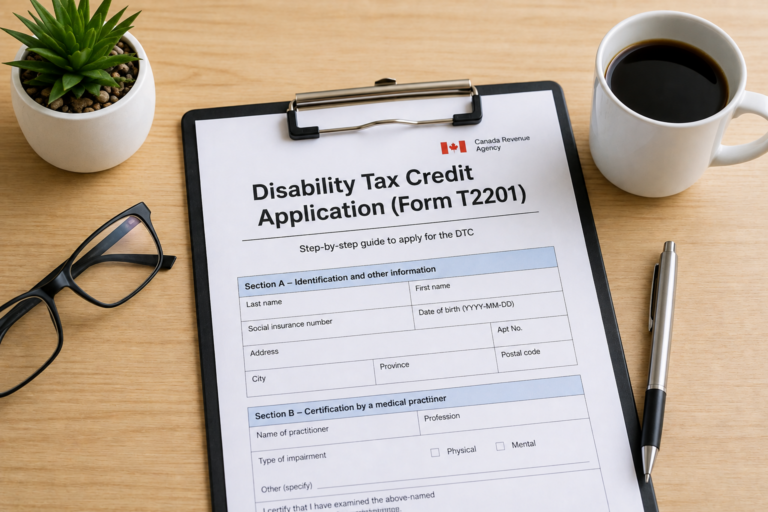
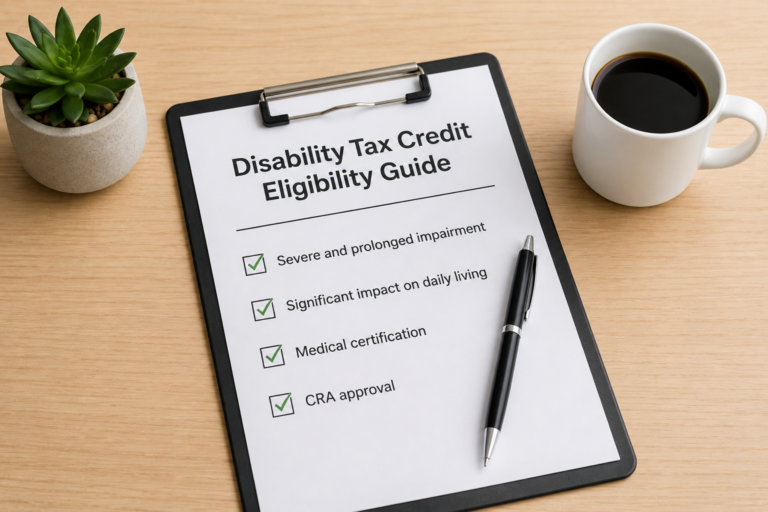
No. The federal Disability Tax Credit is a non-refundable tax credit.
It can reduce income tax payable when the eligibility and certification requirements are met, but an unused current-year amount does not normally create a direct payment.
The Disability Tax Credit may still provide value in several ways:
- It can reduce the eligible person’s income tax.
- An unused amount may be transferred to a supporting family member when the conditions are met.
- Approval can help establish eligibility for certain other federal programs.
- A retroactive approval may permit adjustments to eligible previous tax returns, subject to the applicable time limits.
The Disability Tax Credit should not be confused with the Canada Disability Benefit. The DTC is a non-refundable tax credit, while the Canada Disability Benefit is a separate income-tested payment program.
Is the Medical Expense Tax Credit Refundable?
The regular federal medical expense tax credit claimed through lines 33099 and 33199 is non-refundable.
However, an eligible working person with lower income may also qualify for the refundable medical expense supplement on line 45200.
The two calculations are related but separate:
| Medical Tax Measure | Type | General Effect |
|---|---|---|
| Medical expense tax credit | Non-refundable | Reduces applicable income tax based on the allowable portion of eligible medical expenses |
| Refundable medical expense supplement | Refundable | May create or increase a refund for eligible working individuals who meet the income and expense requirements |
A taxpayer may be able to use the same qualifying medical or disability-support expenses in the calculations when the CRA’s conditions are satisfied.
Is the Tuition Tax Credit Refundable?
The federal tuition amount is a non-refundable tax credit.
An eligible student generally uses the current-year tuition amount first to reduce their own federal tax. Depending on the circumstances, an unused eligible amount may be:
- Transferred within the permitted limit to a spouse, common-law partner, parent or grandparent.
- Carried forward for the student to use in a future year.
The Canada Training Credit is different. It is a refundable credit that may be available to an eligible individual who has accumulated a Canada Training Credit limit and paid qualifying tuition or examination fees.
Is the Home Accessibility Tax Credit Refundable?
The Home Accessibility Tax Credit is non-refundable.
It applies to qualifying renovation expenses intended to make an eligible dwelling more accessible or reduce the risk of harm to an eligible individual.
It should not be confused with the Multigenerational Home Renovation Tax Credit, which is refundable and applies to qualifying expenses for creating a self-contained secondary unit.
| Home Renovation Credit | Type | Primary Purpose |
|---|---|---|
| Home Accessibility Tax Credit | Non-refundable | Eligible accessibility or safety renovations |
| Multigenerational Home Renovation Tax Credit | Refundable | Creating an eligible secondary unit for a senior or an adult eligible for the DTC to live with a qualifying relation |
Tax Credits vs Tax Deductions
A tax deduction and a tax credit affect different stages of the return.
| Tax Measure | What It Generally Reduces | Examples |
|---|---|---|
| Deduction | Income used to calculate tax | RRSP deduction, eligible child-care expenses and certain moving expenses |
| Non-refundable tax credit | Applicable tax payable, but normally not below zero | Basic personal amount, Disability Tax Credit and tuition amount |
| Refundable tax credit | Balance owing and potentially the final refund | Canada Workers Benefit and Canada Training Credit |
A deduction is not automatically more or less valuable than a credit. Its effect depends on the amount, the taxpayer’s marginal tax rate and the rules of the deduction.
Tax Credits vs Government Benefits
Not every payment described as a benefit is claimed as a refundable tax credit on the income tax return.
For example:
- The Canada Child Benefit is a tax-free monthly benefit calculated from tax-return information.
- The Canada Groceries and Essentials Benefit is a tax-free quarterly payment calculated from tax-return information.
- The Canada Workers Benefit is a refundable tax credit claimed through the tax system.
- The Disability Tax Credit is a non-refundable tax credit.
- The Canada Disability Benefit is a separate income-tested monthly benefit.
Filing a tax return can be necessary to receive several government payments, but that does not make every payment a refundable tax credit.
Does a Non-Refundable Credit Ever Increase a Tax Refund?
Yes, indirectly.
A non-refundable credit cannot normally reduce applicable tax below zero. However, it can increase the refund of income tax that was already deducted from pay or paid through instalments.
Consider this simplified example:
- An employer deducted $3,000 of income tax during the year.
- The completed tax calculation initially shows $2,500 of tax payable.
- An allowable non-refundable credit reduces that tax to $1,800.
The taxpayer may receive a $1,200 refund because $3,000 was prepaid and only $1,800 remained payable.
The refund is not the unused portion of the non-refundable credit. It is primarily the return of tax that was overpaid during the year.
Can You Claim a Refundable Credit With No Income?
Possibly, but refundable does not mean automatically available.
Some refundable credits require:
- Employment or self-employment income.
- Qualifying expenses.
- A minimum age.
- Canadian residency throughout the year.
- An accumulated credit limit.
- A completed renovation.
- Specific professional status.
- Income below a program threshold.
For example, the Canada Workers Benefit and refundable medical expense supplement contain working-income requirements. A person with no working income may therefore be ineligible even though these credits are refundable.
Can Unused Non-Refundable Credits Be Carried Forward?
Some can, but many cannot.
| Credit | Possible Treatment of an Unused Amount |
|---|---|
| Federal tuition amount | An eligible unused amount may be carried forward or a permitted current-year amount may be transferred |
| Student-loan interest | Eligible unclaimed interest may generally be carried forward within the permitted period |
| Charitable donations | Eligible donations may generally be claimed in a later return within the applicable carry-forward period |
| Disability amount | An unused amount may be transferable to a supporting person when the rules are met |
| Basic personal amount | An unused portion is not generally carried forward |
A taxpayer should not assume that an unused non-refundable amount will remain available. The rules for the specific credit determine whether it can be carried forward or transferred.
Federal vs Provincial and Territorial Tax Credits
Canadian income tax returns can include both:
- Federal tax credits.
- Provincial or territorial tax credits.
A federal non-refundable credit generally reduces federal tax. A provincial or territorial credit generally reduces tax calculated for the applicable province or territory.
The amounts, rates and eligibility rules can differ. A credit available federally may:
- Have a separate provincial equivalent.
- Use a different provincial amount.
- Not exist in every province.
- Be refundable provincially but non-refundable federally.
- Have different income thresholds.
Most taxpayers calculate provincial or territorial credits using the package for the jurisdiction where they resided on December 31 of the tax year. Quebec administers its own provincial income tax return.
How Tax Credit Rates Affect the Actual Reduction
The amount entered for a non-refundable credit is not always equal to the final reduction in tax.
Many federal non-refundable credits are calculated by applying the applicable federal credit rate to a qualifying amount.
For example, claiming a qualifying amount of $10,000 does not necessarily reduce the final tax bill by $10,000. The tax reduction is calculated using the rules and applicable rate for that credit.
The lowest federal income tax rate changed for the 2025 tax year. The 2025 return also introduced a top-up tax credit intended to preserve a 15% rate for certain affected non-refundable credits claimed on amounts above the first income-tax bracket threshold.
Taxpayers should use the official form, worksheet or certified tax software for the applicable tax year instead of applying a rate from an older return.
Why a Tax Credit May Not Produce the Expected Refund
A taxpayer can qualify for a refundable credit and still receive less than expected.
Possible reasons include:
- The credit first reduced an existing balance owing.
- The CRA changed an ineligible expense.
- The income or family information did not match the claim.
- The credit was reduced by an income threshold.
- Another government debt was recovered from the refund.
- An earlier benefit overpayment remained outstanding.
- A tax slip was missing or corrected.
- Instalments or tax deducted at source differed from the amount entered.
- The taxpayer claimed the full qualifying amount instead of the calculated credit.
- Only one person was permitted to claim the expense.
- The same expense was claimed twice.
The notice of assessment explains the CRA’s final calculation and identifies changes made to the filed return.
Can Two People Claim the Same Tax Credit?
It depends on the credit.
Some credits:
- Can be divided between eligible claimants.
- Can be transferred to a supporting family member.
- Must be claimed by only one person.
- Limit the combined claim to the maximum eligible amount.
- Require the claimants to agree on how expenses are allocated.
The same qualifying expense cannot normally be used to create duplicate claims beyond the amount permitted by the legislation.
What Documents Should You Keep?
Supporting documentation can include:
- Official receipts.
- Tuition tax certificates.
- Medical prescriptions and invoices.
- Proof of payment.
- Renovation contracts and supplier invoices.
- Donation receipts.
- Student-loan statements.
- Disability Tax Credit approval information.
- Employment and income slips.
- Records showing the relationship between eligible family members.
- Forms or certifications required by the individual credit.
Documents should normally be retained for at least six years from the end of the tax year to which they relate, although some records may need to be kept longer.
Sending every receipt with an electronically filed return is not normally required. The CRA can request supporting documents during a review.
How to Claim Tax Credits in Canada
- Identify the correct tax year.
- Review the federal and applicable provincial or territorial credits.
- Confirm whether each credit is refundable or non-refundable.
- Check eligibility before entering an amount.
- Collect the required receipts, certificates and tax slips.
- Use the correct tax-return line, schedule or worksheet.
- Apply any family-income or expense limits.
- Determine whether a transfer or carry-forward is permitted.
- File the income tax and benefit return.
- Review the notice of assessment for changes.
Certified tax software generally completes the sequence of calculations once the relevant information is entered, but the taxpayer remains responsible for the accuracy of the return.
Common Tax Credit Mistakes
- Assuming every tax credit creates a cash payment.
- Confusing a qualifying amount with the actual value of the credit.
- Claiming a deduction as a tax credit.
- Treating a government benefit as a refundable credit.
- Using the rules or rates from the wrong tax year.
- Claiming the same expense twice.
- Failing to keep official receipts.
- Ignoring provincial or territorial credits.
- Forgetting eligible transferred or carried-forward amounts.
- Attempting to carry forward a credit that does not permit it.
- Assuming that “refundable” removes income or expense requirements.
- Entering a full expense when only a calculated portion is claimable.
- Confusing the Disability Tax Credit with the Canada Disability Benefit.
- Confusing the tuition amount with the Canada Training Credit.
- Confusing the Home Accessibility Tax Credit with the Multigenerational Home Renovation Tax Credit.
Refundable and Non-Refundable Tax Credit Checklist
- Confirm the exact name of the credit.
- Check whether it is federal, provincial or territorial.
- Use the rules for the correct tax year.
- Determine whether the credit is refundable.
- Check age, residency and income requirements.
- Confirm which family member can claim it.
- Calculate the qualifying expense or amount correctly.
- Review transfer and carry-forward rules.
- Keep the required receipts and certificates.
- Use the correct return line and schedule.
- Check whether tax software applied a provincial equivalent.
- Review the notice of assessment after filing.
Related Tax Credit Guides
Frequently Asked Questions
What is the difference between a refundable and non-refundable tax credit?
A refundable credit can reduce a balance owing and may generate a refund when the credit exceeds the applicable tax. A non-refundable credit can generally reduce applicable tax to zero but does not create a refund from its unused portion.
Can a non-refundable tax credit increase my refund?
It can indirectly increase the refund of tax already deducted or paid during the year by reducing the final tax payable. However, the unused portion of the credit does not normally become a payment.
Can I receive a refundable credit if I paid no income tax?
Possibly. A refundable credit can produce a payment even when no income tax is payable, but all eligibility, income, residency, employment and expense requirements must still be met.
Is the Disability Tax Credit refundable?
No. The Disability Tax Credit is non-refundable. It can reduce tax payable, and an unused amount may be transferable to a supporting family member when the conditions are met.
Is the Canada Workers Benefit refundable?
Yes. The Canada Workers Benefit is a refundable tax credit for eligible individuals and families who are working and earning lower incomes.
Is the medical expense tax credit refundable?
The regular medical expense tax credit is non-refundable. A separate refundable medical expense supplement may be available to eligible working individuals with lower incomes.
Is the tuition tax credit refundable?
No. The federal tuition amount is non-refundable. Eligible unused amounts may be transferred within the permitted limit or carried forward under the applicable rules.
Is the Canada Training Credit refundable?
Yes. It is a refundable credit that can help eligible individuals with qualifying tuition and examination fees, subject to their available Canada Training Credit limit.
Do all non-refundable credits have the same value?
No. The value depends on the qualifying amount, applicable credit rate, income, tax payable and the specific rules of the credit.
Can unused non-refundable credits be carried forward?
Some can, including eligible tuition amounts, student-loan interest and charitable donations under their respective rules. Many other credits cannot be carried forward.
Are provincial credits also refundable or non-refundable?
Yes. Provinces and territories can provide both types. Their amounts, eligibility requirements and calculation rules can differ from the federal credits.
Is a tax refund the same as a refundable tax credit?
No. A tax refund is the final amount returned after the entire tax return is assessed. It can include overpaid income tax, refundable credits and other adjustments.
Where can I find my total federal non-refundable tax credits?
The total is reported on line 35000 of the federal income tax return after the applicable credits have been calculated.
Official CRA Tax Credit Resources
Review current federal credits, tax-return lines and eligibility requirements through the Canada Revenue Agency.
View All Deductions and Credits View the Federal Tax Guide Review Non-Refundable CreditsNorthbly is an independent informational website and is not affiliated with the Government of Canada, the Canada Revenue Agency or any provincial or territorial government. Tax-credit amounts, rates, income limits, eligible expenses and filing rules can change. This information is general and does not constitute tax or financial advice. Always verify current requirements through Canada.ca or a qualified tax professional.